Atmospheric Haze for Lighting Without Tripping the Fire Alarm
A practical producer’s guide to using haze for better beams and depth without turning your load-in into a fire marshal meeting.
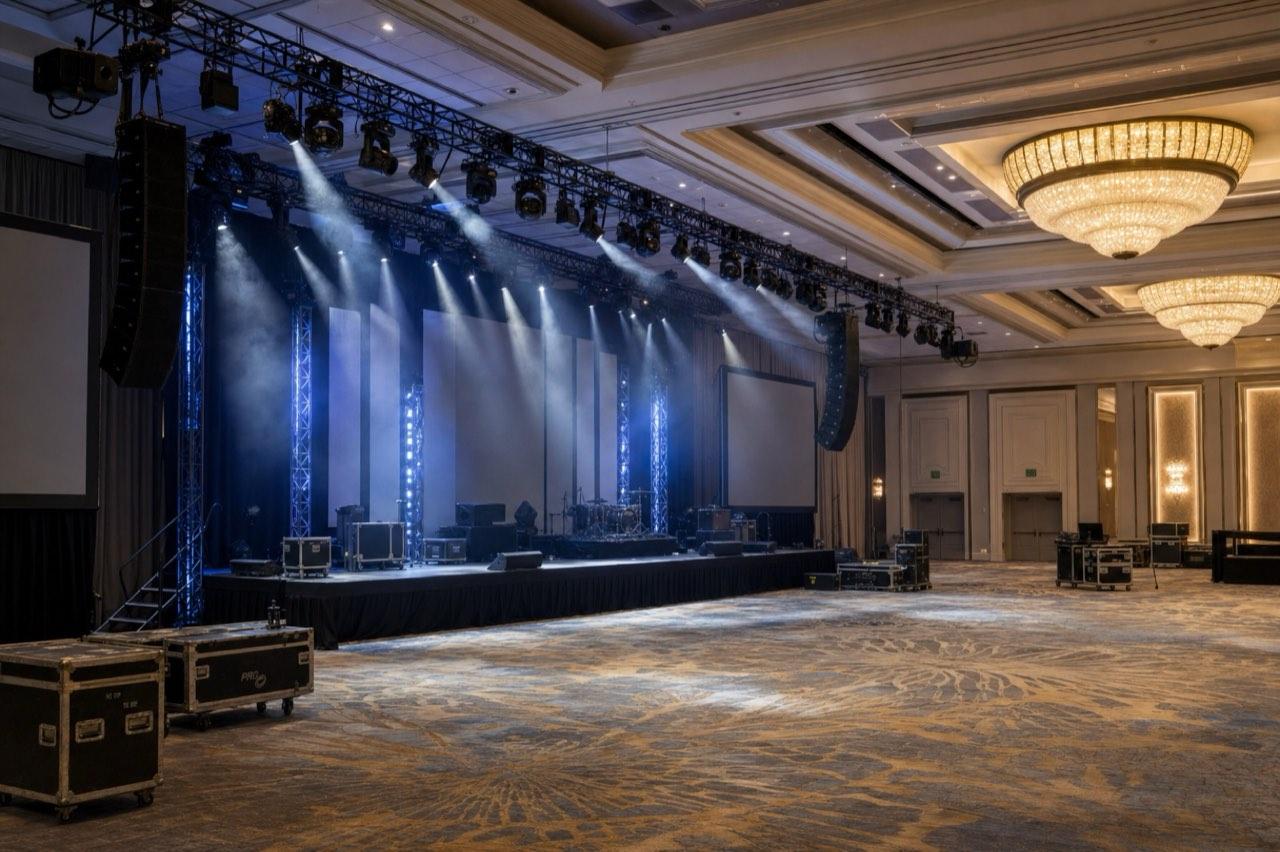
You’ve got a clean truss, a tight focus chart, and the LD is ready to make the room feel like a show. Then someone asks the question that can derail the whole day: "Are we allowed to haze in here?"
Atmosphere is one of the cheapest ways to make lighting read on camera and in the room. It’s also one of the fastest ways to create a false alarm, an evacuation, and a very uncomfortable conversation with venue ops. The goal isn’t to sneak it in. The goal is to plan it like any other system: understand the building, set expectations, and control the variables.
what haze is doing for you (and what it isn’t)
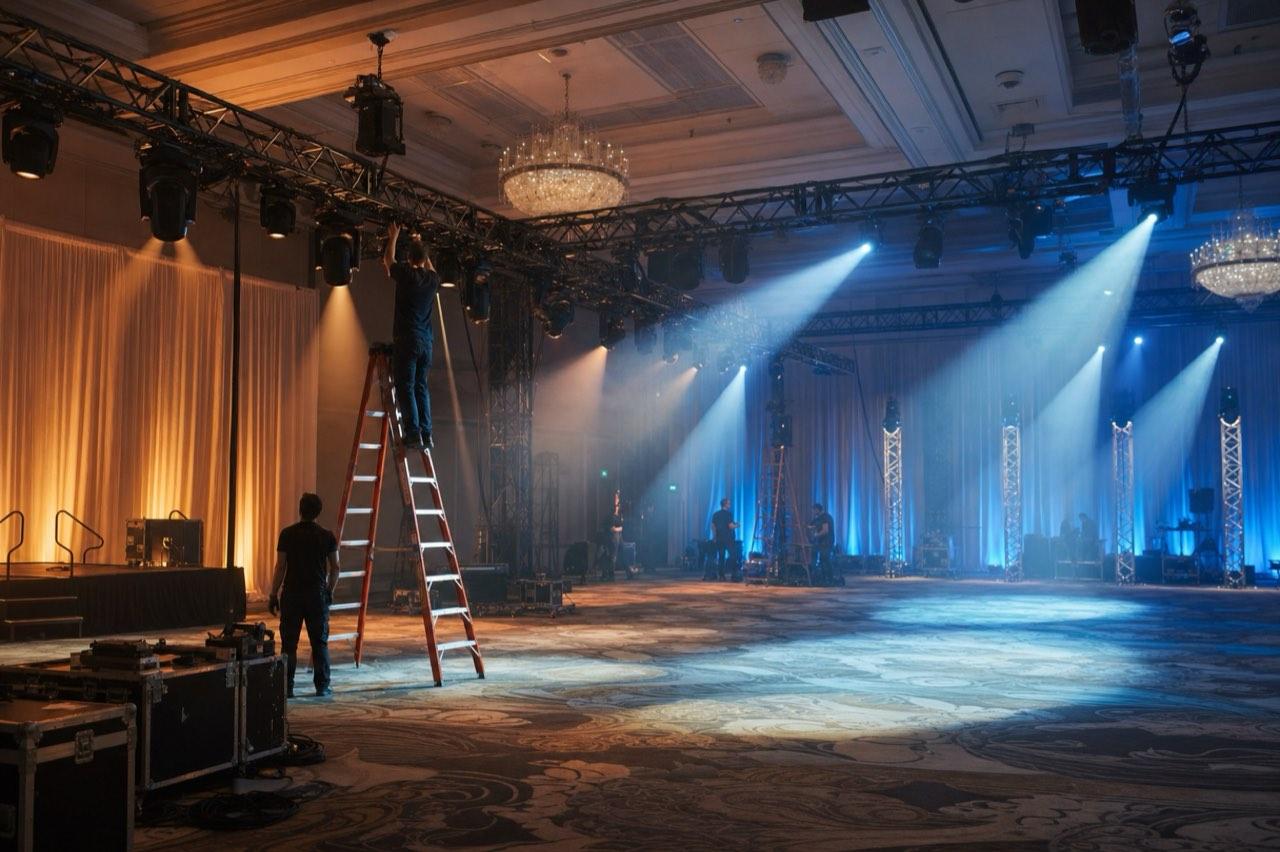
In a ballroom, most of your lighting work is happening in three layers: the stage, the room, and the air between. Haze gives you that third layer. It makes beams visible, adds depth, and helps a simple two-color look feel intentional.
Two quick realities we plan around:
- Haze doesn’t fix bad angles. If your downstage key is flat and your backlight is missing, haze won’t make the stage look better.
- Haze is a room system, not a stage system. It interacts with HVAC, ceiling height, air returns, and detectors.
Used well, a light haze level can make movers look like a bigger rig, help corporate walk-up moments feel more dimensional, and make scenic textures read without pushing brightness.
haze vs fog vs “low-lying”: picking the right effect for a ballroom
Most problems start with language. Venues hear “smoke” and assume you’re bringing a nightclub fog cannon. We treat the effects like three different tools with different behaviors.
Haze is a fine particulate designed to hang in the air and be evenly distributed. It’s about beams and depth.
Fog is heavier output, more visible, and tends to plume. It’s useful for an entrance hit or a moment, but it’s harder to keep subtle.
Low-lying fog is an ice/dry-ice or chiller-based effect meant to stay on the floor. It’s common for weddings and reveals, but it’s also the one that tends to trigger venue concerns because it looks dramatic and can spill into egress paths if overdone.
For corporate, galas, and most stage work in hotels, we default to haze unless the show explicitly calls for a fog moment. The more your goal is “barely there,” the more you want haze and not fog.
the detectors are the real client: know what you’re dealing with
Fire systems vary wildly. Two ballrooms in the same hotel can behave differently depending on renovations and where the airflow actually goes. Before we commit to atmosphere, we try to get answers to a few specifics from the venue.
Key questions that change the plan:
- What type of detection is in the room: photoelectric smoke, ionization, beam detection, aspirating systems, or multi-criteria units?
- Where are the detectors located: ceiling, near air returns, in soffits, in prefunction, in loading corridors?
- Can the venue isolate (bypass) zones, and if so, what’s the documented process and who approves it?
- Is there a central monitoring service that requires additional steps?
You don’t need to become a fire protection engineer, but you do need to stop treating the room like a blank box. The airflow patterns matter as much as the detector type. If your haze drifts straight into a return near a detector, you can trip a system even at a low level.
talk to venue ops early, and talk like an operator
The fastest way to get a “no” is to email a venue and ask, “Can we use haze?” with no context. The fastest way to get a workable plan is to describe the intent, the equipment, and how you’ll control it.
We phrase it like this:
- We’re looking for a light, even haze level to make beams visible.
- We can run it in short intervals and keep the output low.
- We’ll do a test at a scheduled time with venue engineering present.
- If it’s not workable, we’ll proceed without it.
That last line matters. Venues are protecting the building, their guests, and their reputation. If you come in sounding like you’re going to force it, you’re done. If you come in with a plan and a clear off-ramp, you’ll usually get collaboration.
schedule a haze test like you schedule audio pink noise
If haze is important to the look, it deserves a test window. We bake it into the production schedule the same way we plan line check and video calibration.
A useful test plan is simple:
- Confirm the room is in the show configuration (pipe and drape up, scenic in, people moving).
- Start with the lowest output setting and shortest burst interval.
- Watch where it goes for 10–15 minutes, not 30 seconds.
- Adjust placement and fan direction before you increase output.
- Stop and reset if you see drift toward known detector locations or returns.
We also keep the test honest. If the room trips at a low level during a controlled test, it’s not a “maybe.” It’s a “no,” and we move on. It’s better to lose beams than to lose the room.
machine placement: where you put it matters more than the brand
In ballrooms, haze machines get treated like a stage prop: toss it upstage and forget it. That’s how you end up with a dense pocket on stage and a clean room everywhere else.
We think in distribution. Our default placement is often offstage and upwind of the stage based on HVAC behavior, not strictly upstage. Sometimes the best location is a wing area with a small fan pushing haze across the room.
Placement guidelines we use:
- Avoid pointing haze directly at ceilings, returns, or soffits where detectors live.
- Don’t place the unit under an air return or in the path of a strong supply vent.
- Use gentle fans to spread haze; don’t blast it.
- Keep the machine accessible so you can dial it back fast if needed.
If the room has a strong supply vent that blows across the stage, we’ll often place the machine downwind and let the supply move the haze slowly back through the rig. If the HVAC is aggressive and variable, we plan for less atmosphere overall.
control it like a system: output, intervals, and human responsibility
The easiest way to get in trouble is to put haze on a switch and let it run unattended. We assign ownership. One person is responsible for the haze level, and they have a clear cue to stop.
A short checklist we use on show days:
- Who is running the haze (name, not “someone”)?
- What is the target level (light, medium, momentary hit)?
- When do we stop (doors, speaker walk-up, during a segment)?
- Where is the “off” located (power, controller, DMX)?
If we’re on DMX, we still avoid long, continuous output. We run pulses. The goal is to maintain a baseline, not build density. You want the light to read, but you want the air to stay breathable and the room to stay stable.
ventilation and air quality: you can’t ignore comfort
Even when the fire system is fine, comfort can kill the plan. Some attendees are sensitive to haze. Some presenters will complain the moment they see it. And sometimes the room is already warm and stale, and haze makes it feel worse.
We try to manage comfort proactively:
- Keep the haze level lighter than the LD’s first instinct for a corporate audience.
- Build looks that still work clean, so you can drop haze without wrecking the show.
- Coordinate with venue engineering on airflow adjustments if they’re available and safe.
If the room is poorly ventilated, we keep haze minimal and save it for specific visual moments. A clean room with solid lighting beats a hazy room where the audience is distracted.
cameras see haze differently: plan for broadcast and IMAG
Haze can make on-camera looks feel richer, but it can also create problems: reduced contrast, lifted blacks, and visible particulate in tight shots.
If you’re streaming or cutting IMAG, we plan haze in the camera workflow:
- White balance and exposure should be set with the target haze level present.
- Wide shots will show beams; tight shots may show noise or haze speckle depending on lighting angles.
- Projectors and LED walls can bloom more in haze, so we keep an eye on how content reads.
A common failure mode is testing cameras clean, then adding haze right before doors. Suddenly the image looks softer and everyone scrambles. If haze is part of the look, it needs to be present during camera shading and rehearsal.
common failure modes (and how we avoid them)
This is where the producer mindset matters. Haze isn’t “yes/no.” It’s a set of risks you can reduce.
failure mode 1: detector trips during load-in
Load-in is when doors are open, HVAC is changing, and haze is most likely to drift into places you didn’t expect. We avoid early haze unless the test window is explicitly approved.
failure mode 2: the room looks patchy
Patchy haze usually comes from poor distribution. Fix it with placement and gentle fans, not with more output.
failure mode 3: presenter complains, and the show goes sideways
We plan clean looks and we keep haze light. If a presenter requests a clean stage, we can comply instantly.
failure mode 4: prefunction or adjacent space triggers
Ballrooms share air. Haze can drift into prefunction, service corridors, or breakout rooms. We coordinate boundaries (doors, drape, airwalls) and we monitor adjacent zones, not just the main room.
a short bulleted list: what we ask venues before we commit to haze
- What detection is in the ballroom and prefunction?
- Where are the detectors and air returns located?
- Is there a documented process for isolating zones, and who signs off?
- Can we schedule a controlled haze test during load-in?
- Are there HVAC constraints we should plan around (strong supply, variable air volume changes, overnight setbacks)?
Those questions don’t guarantee a “yes,” but they prevent surprises.
when you should skip haze entirely
There are rooms where haze just isn’t worth it. We’ll recommend skipping it when:
- The venue has a strict no-atmosphere policy with no test option.
- The ballroom has sensitive detection and the airflow path is unpredictable.
- The show is high-stakes corporate with limited rehearsal and no tolerance for risk.
- The room is already air-quality challenged and comfort is a priority.
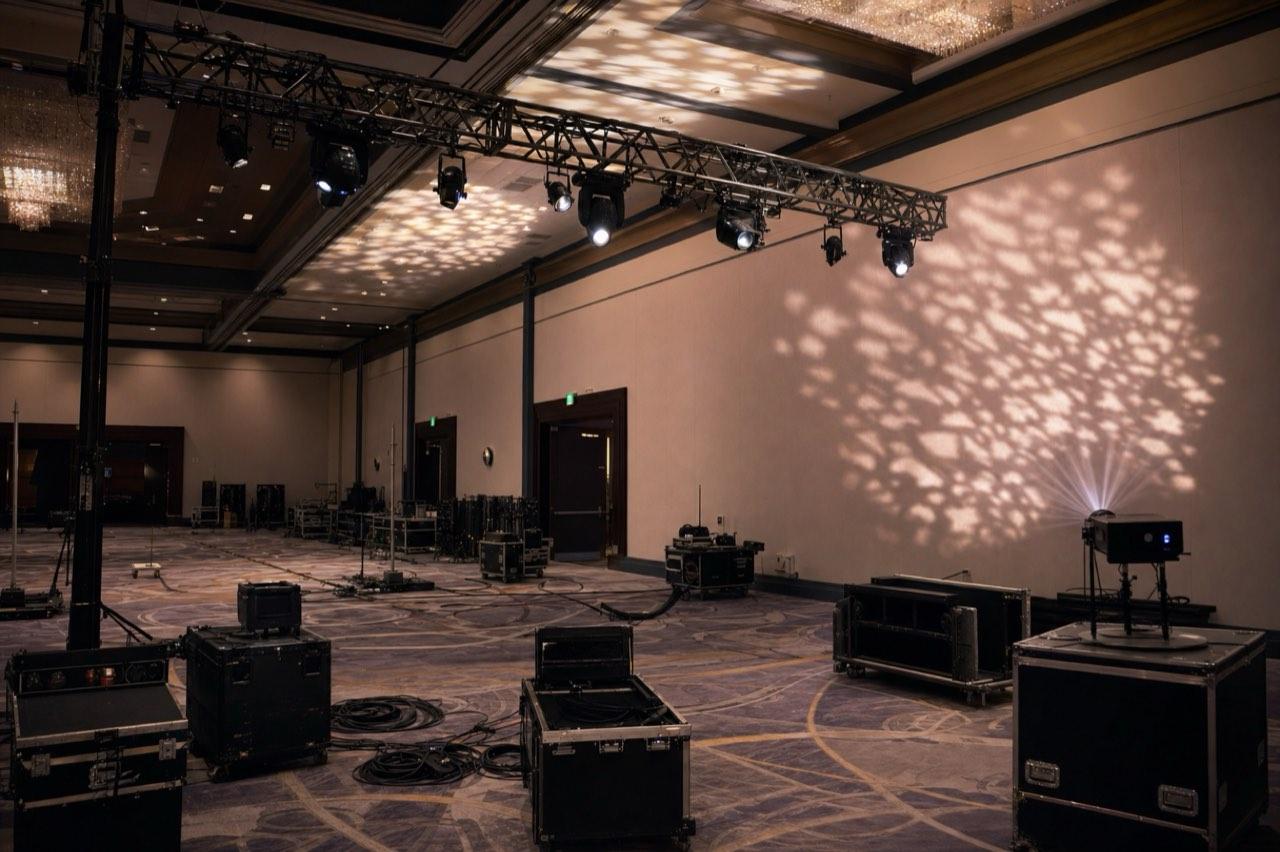
Skipping haze doesn’t mean flat lighting. It means you lean into other tools: backlight separation, texture gobos on scenic, controlled audience light, and content-driven visuals that read clean.
how we build a “works clean” lighting plan that still feels like a show
When haze is uncertain, we design two versions of the look. The haze version is the ideal. The clean version is the guarantee.
Tactics that hold up clean:
- Strong backlight and side light to separate talent from scenic
- Texture on drape and walls (soft breakup, not busy)
- Balanced color temperature so cameras aren’t fighting mixed sources
- Intentional dimmer timing so cues read without relying on beams
If haze is approved, great. If it gets pulled, the show still looks intentional. That’s the difference between hoping and producing.
practical notes on fluids, residue, and the room you have to give back
Even light haze can leave residue over time, and venues are sensitive about it, especially around chandeliers, polished floors, and fabrics. We keep it conservative and we use fluids that are appropriate for professional event environments.
We also plan cleanup and resets like adults:
- Don’t run haze directly onto projection lenses, LED tiles, or scenic finishes.
- Keep units off carpet edges and drape bases where spills become a problem.
- If the venue asks for a post-show wipe-down in specific areas, we plan labor for it.
Residue issues are usually a result of overuse, not responsible haze levels. But it’s still your name on the event, so we treat it seriously.
the takeaway: make haze a planned variable, not a surprise
If you treat haze like a last-minute creative add-on, you’re inviting risk. If you treat it like an engineered part of the room plan, it’s usually manageable. Ask the right questions, schedule a test, control distribution, and keep a clean look in your back pocket.
If you want EventProSource to spec the haze plan and the lighting approach for your event, we can build a plan that covers the target look, the venue approval path, and a clean fallback that still reads on camera. Email hello@eventprosource.com for a 24-hour quote and a practical recommendation based on your run of show.