Wedding Uplighting: A Producer's Guide to Color and Placement
A practical uplighting plan: surfaces, power, camera impact, and cue timing for a room that reads clean all night.
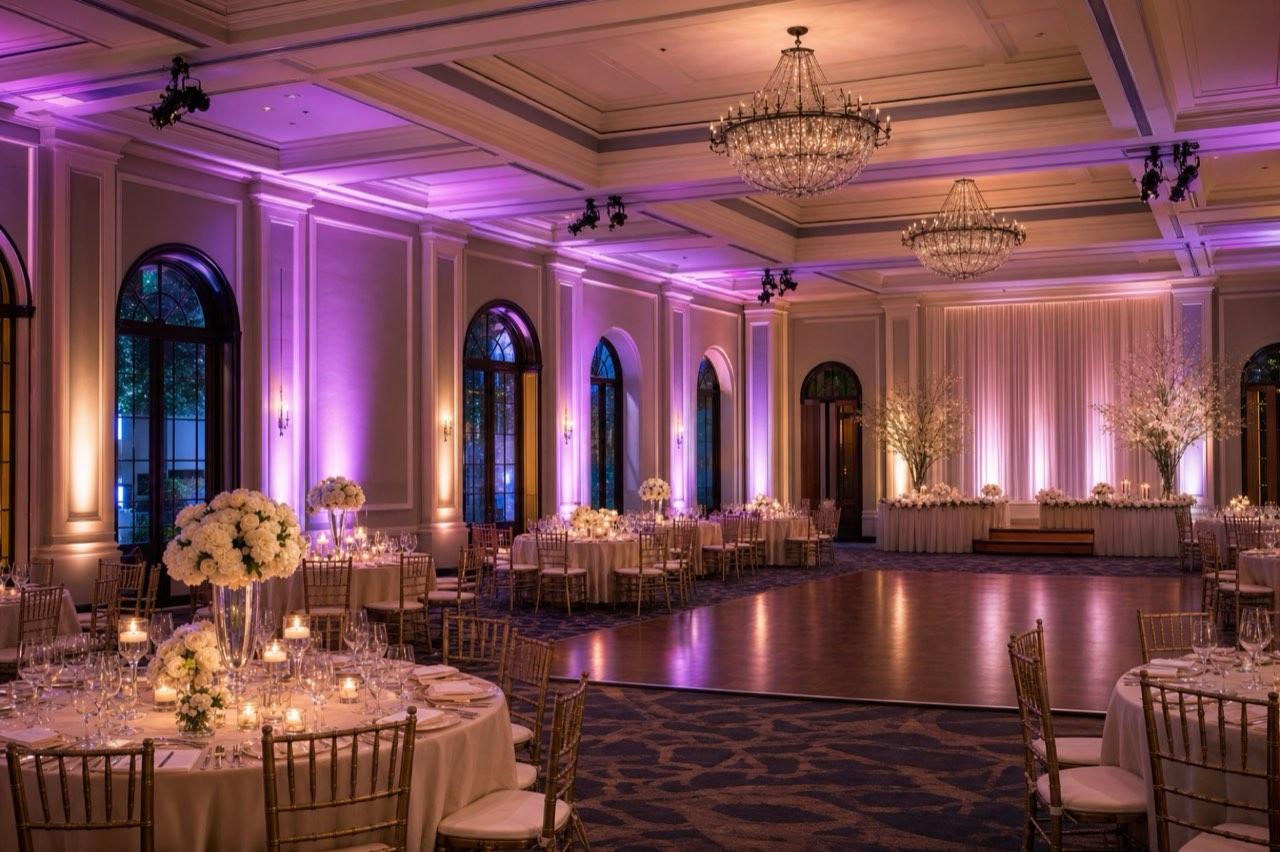
Wedding uplighting is one of those line items that looks simple in a deck and turns into a dozen decisions once you’re in the room. The fixtures are easy. The plan is the hard part: where the power comes from, what color reads on camera, and how to keep the room flattering from doors through the last song.
start with the room, not the fixture count
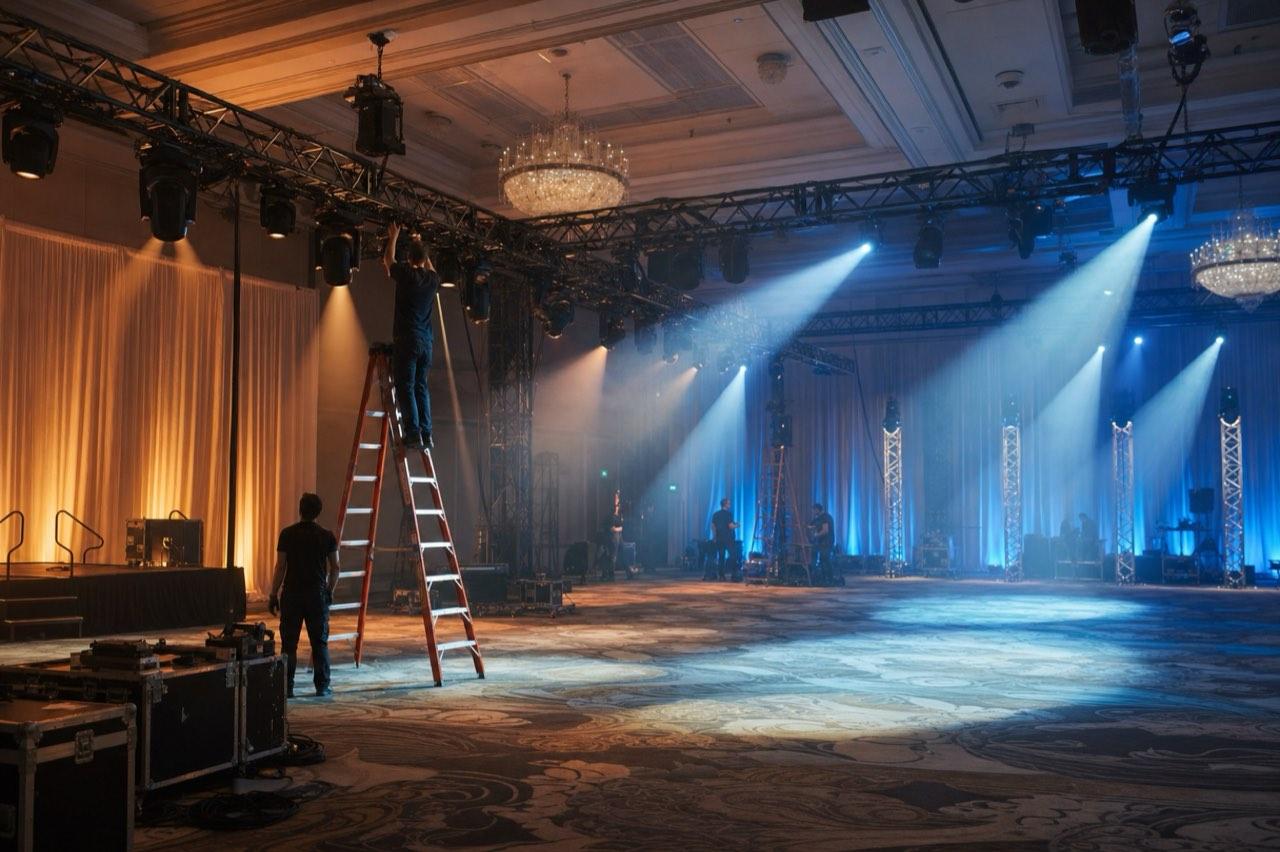
Walk the space like a load-in, not like a site visit. Look for wall breaks (columns, mirrors, drape pockets), ceiling height changes, and any architectural elements the planner cares about. Uplight works best when it has a surface to “grab” and a clear line from floor to feature.
A quick room read we do before we spec anything:
- Where are the long uninterrupted walls?
- Which walls will be behind the couple, the band/DJ, and the head table?
- Where are the sightline photos taken from (entry, bar, dance floor edge)?
- What’s the existing house lighting color temperature doing at dinner and at dancing?
If the room has lots of glass, mirrors, or glossy finishes, fewer fixtures with tighter aim will look cleaner than “one on every column.” If the room is matte and neutral, you can spread the wash more evenly and still get saturation.
map uplighting to the night’s beats
Uplighting should support the arc of the night. That doesn’t always mean dramatic color changes; it means the room should feel intentional at every moment.
We usually plan three looks:
- Doors / cocktail: welcoming, slightly warm, low intensity. If the planner wants color, keep it restrained.
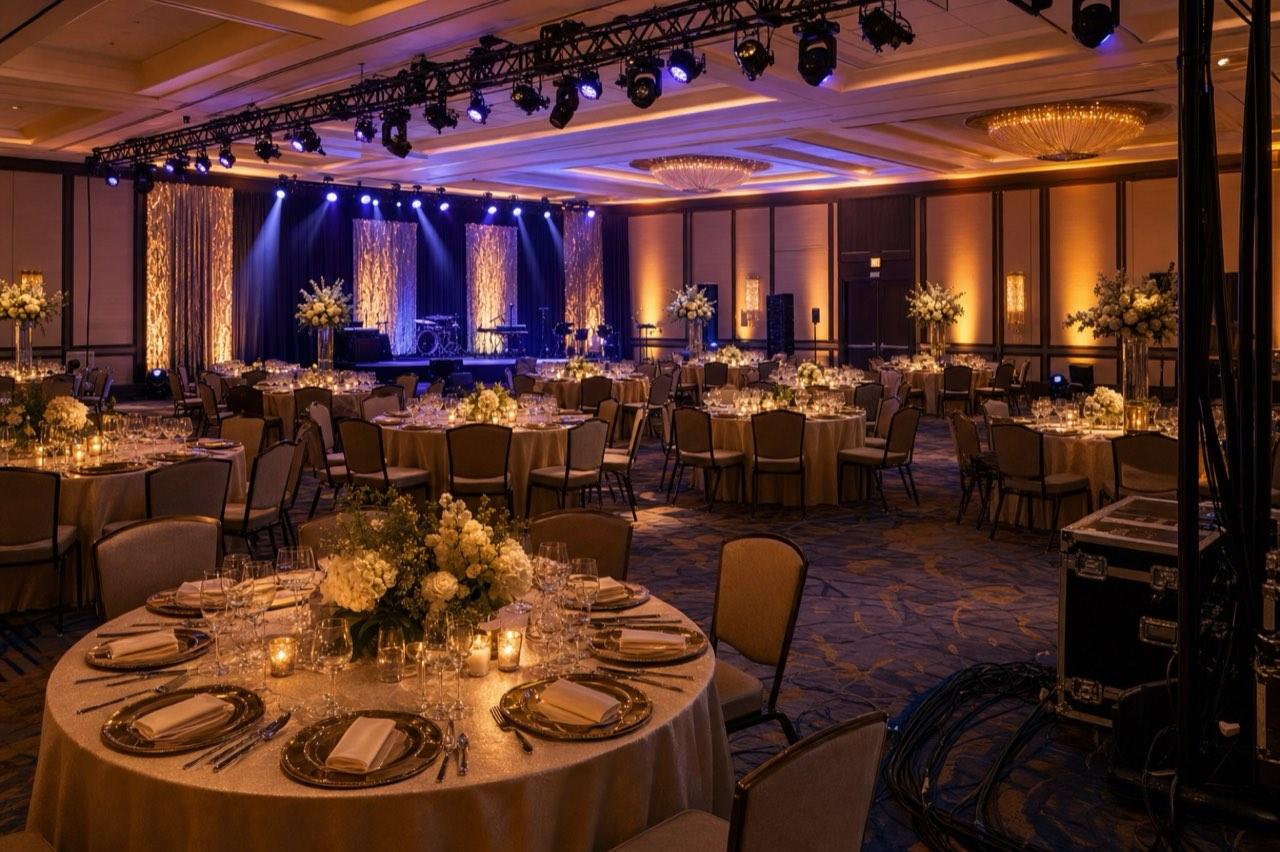
- Dinner / speeches: flattering on skin, consistent on camera, and stable so the room doesn’t feel like it’s pulsing.
- Dancing: higher saturation and/or movement (if you’re adding it elsewhere), with enough contrast that the dance floor feels separate.
If you know the photographer is shooting wide room photos early, prioritize the walls that frame the dance floor and head table first. If the couple is doing a grand entrance, make sure your “doors” look doesn’t fight the spotlight or any follow system.
color: pick a reference and stick to it
Wedding uplighting is where color theory meets reality. A color that looks great on a fixture test in the shop can read completely different once it hits a beige wall next to warm chandeliers.
We start with a reference:
- Warm candlelight rooms: many ballrooms sit around 2700K–3200K once chandeliers are on.
- Neutral modern rooms: often closer to 3500K–4000K with a cleaner white.
- Daylight-heavy rooms: big windows can push the room toward 5000K+ early in the night.
If the goal is “romantic and soft,” we’ll often build the room on warm white or a subtle amber and then introduce color later. If the goal is “modern and saturated,” we’ll still keep dinner readable by staying in the same color family (for example, a restrained lavender at low intensity) rather than going full deep blue at the moment speeches start.
Two practical notes producers appreciate:
- Magenta is unforgiving. It can make skin look gray and it can contaminate white florals. If you use it, keep it off faces and off the sweetheart backdrop.
- Deep blue eats the room. It can make the room feel smaller and it can make black tuxes disappear on camera. Great for a late-night look, risky for dinner.
placement: even spacing is a starting point, not a rule
The “standard” is one uplight every 8–12 feet along a wall, aimed up with a slightly fanned beam. That’s a decent baseline, but weddings aren’t standard.
Here’s how we adjust:
- Columns: one per column can look good, but only if the column is the feature. If columns are tight, we’ll often light between columns to avoid hot spots.
- Drape: drape loves uplight, but it also shows every hotspot. Wider beam, lower intensity, and careful distance off the fabric.
- Mirrors / glass: keep fixtures slightly off-axis so you don’t see bright points and reflections.
- Sweetheart / head table backdrop: we treat it as its own mini set. It gets its own fixture plan so it reads in photos.
If you’re short on fixtures, prioritize what’s in every photo: the wall behind the dance floor, the wall behind the head table, and the entry sightline.
power and cabling: make it invisible on purpose
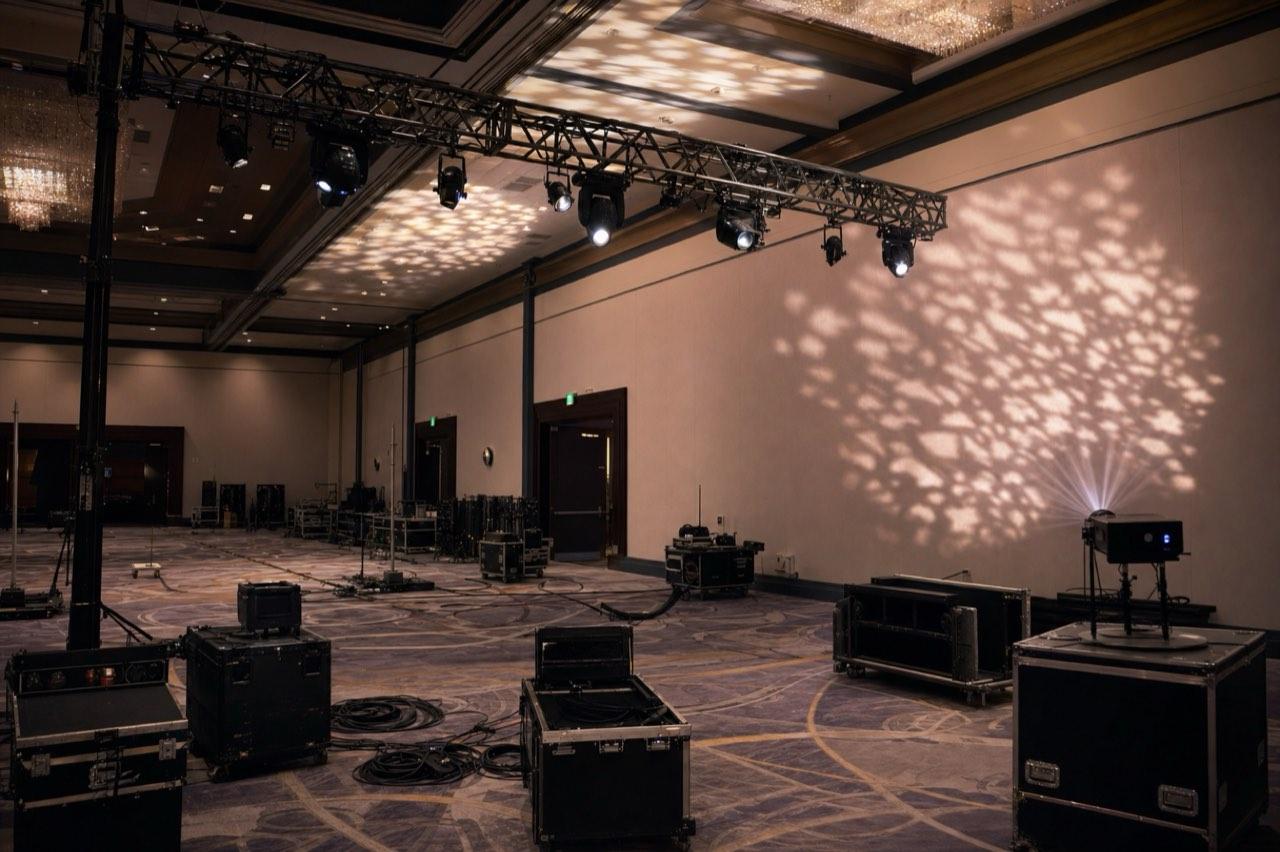
Uplighting is usually low draw, but the cabling can wreck the look if it’s not planned. Most wedding rooms don’t have floor pockets where you want them, and you’re sharing circuits with catering, DJ, and sometimes photo booths.
We plan power the same way we plan sightlines:
- Identify a few reliable circuit zones and build runs back to them.
- Keep cable routes tight to baseboards and behind drape when possible.
- If you’re crossing open areas, do it once, do it cleanly, and protect it.
A short checklist we use on walk-throughs:
- Where are the dedicated wall outlets and what else is on those circuits?
- Are there floor pockets near the band/DJ position and head table?
- Is the venue strict about tape type, cable ramps, or crossing thresholds?
- What’s the load-in schedule, and when does décor install block your cable paths?
Battery uplights can help in high-visibility spots, but we still plan charging, spares, and a failure mode. If a battery unit dies during dinner, you need a quick swap plan that doesn’t turn into a ladder parade.
wireless control and addressing: decide your tolerance for complexity
For many weddings, simple is smart: a few looks, recalled at specific moments. But even “simple” requires a clean control plan.
If we’re doing wireless DMX, we’ll confirm where the transmitter lives (often FOH with the DJ or in a small control corner), and we’ll confirm we have line of sight to the room. If the venue is dense with Wi‑Fi and guests, we build in redundancy: spare transmitter, spare receiver, and the ability to lock a look locally if control drops.
Addressing can be as minimal or as granular as you want. For weddings, we often group by zones:
- perimeter walls
- head table wall
- dance floor wall
- entry / cocktail spill
That gives you flexibility without turning the night into a programming session.
managing hotspots, shadows, and “dirty” walls
Real walls aren’t perfect. Scuffed paint, patched drywall, and uneven textures all show up when you blast color at them. The fix is almost never “more brightness.”
We manage it with:
- Distance: pulling fixtures a bit off the wall to widen the spread.
- Angle: slight toe-in or toe-out to avoid burning a single spot.
- Intensity discipline: lower intensity often looks more expensive and more even.
- Fixture choice: a fixture with smoother color mixing will hide sins better.
If the room has heavy texture, you can lean into it with warm tones and soft colors. If it’s a flat wall with visible patches, avoid super saturated colors at high intensity early in the night.
uplighting and cameras: plan for photo and video, not just the room
Weddings are documented like studio shoots. If you don’t think about camera early, you end up with a room that looks great to the eye and looks strange on screen.
We’ll coordinate on a few basics:
- What are the photographer’s typical angles for wide shots?
- Is there a video team, and are they using on-camera lights?
- Are there any live screens, projection, or LED elements in the room?
Uplight color can shift how white dresses read. It can also shift how florals read. If the couple cares about true whites, we keep the key backdrops near a neutral white during dinner and speeches and use color in the perimeter.
If you’re adding a stage wash for a band, make sure the wash and the uplight aren’t fighting. A warm band wash with cool blue uplight can make the room feel disjointed unless that contrast is intentional.
coordinating with florals, drape, and décor (without stepping on toes)
This is where producer tone matters. We don’t “own” the room by overpowering the décor; we support it.
A few practical coordination moves:
- Ask what the primary floral colors are and avoid making them look muddy.
- If there’s a big drape reveal, keep uplights in a safe, neutral look until the reveal lands.
- If there are candles everywhere, don’t crank uplight so high that the candles disappear.
We also plan for the timeline. Décor install often blocks access to the perimeter. If we need fixtures behind a bar build or behind a head table install, we either pre-place and protect them or we accept we won’t get them there later.
common failure modes (and how we avoid them)
Uplighting is reliable, but weddings are chaotic. Here are the problems we plan around:
- Fixtures get kicked or moved during room flip or dancing. We tape positions and keep spares staged.
- Battery units drift if they weren’t fully charged or if they’re older. We bring extra units and a swap plan.
- Wireless control gets flaky when the room fills. We keep looks simple and ensure fixtures can hold a static state.
- Color expectations shift once the couple sees the room. We build a quick “approval pass” into the schedule.
The goal isn’t perfection. The goal is a room that reads consistent in person, in photos, and on video, with a plan that survives the reality of weddings.
a practical spec approach for producers
If you’re building a quote or a run-of-show plan, here’s a producer-friendly way to spec uplighting without overshooting:
- Start with perimeter coverage for the main room.
- Add a dedicated backdrop plan for head table/sweetheart and band/DJ wall.
- Decide whether you need battery fixtures for high-visibility locations.
- Choose three looks (doors, dinner, dancing) and keep changes intentional.
- Confirm power plan and cable routes before décor blocks access.
That approach keeps you focused on results, not on fixture counts.
the handoff: who calls cues, and when
Even if you’re not running a full show, someone needs to be responsible for changes. If uplighting shifts at the wrong time, it’s obvious.
We like to tie uplight changes to concrete moments:
- couple entrance
- first dance
- open dance floor
- final song
If the DJ is calling cues, we’ll keep it simple and provide a cue sheet with two or three buttons. If we’re running it, we’ll lock in timing so we’re not changing color mid-toast.
closing thoughts
Wedding uplighting looks easy because it’s quiet when it’s done right. But the difference between “we put lights around the room” and “the room looks designed” is planning: surfaces, power, camera impact, and cue timing.
If you want EventProSource to spec the uplighting plan for your wedding reception, we can build a plan that covers the primary look, a backup approach, and the operational details that keep it clean during load-in. Email hello@eventprosource.com for a 24-hour quote and a practical recommendation based on your run of show.