LED PAR Fixtures Versus Traditional PAR Cans for Event Lighting
LED PARs cut power and heat while giving you flexible color, but legacy PAR cans still win in a few very specific situations.
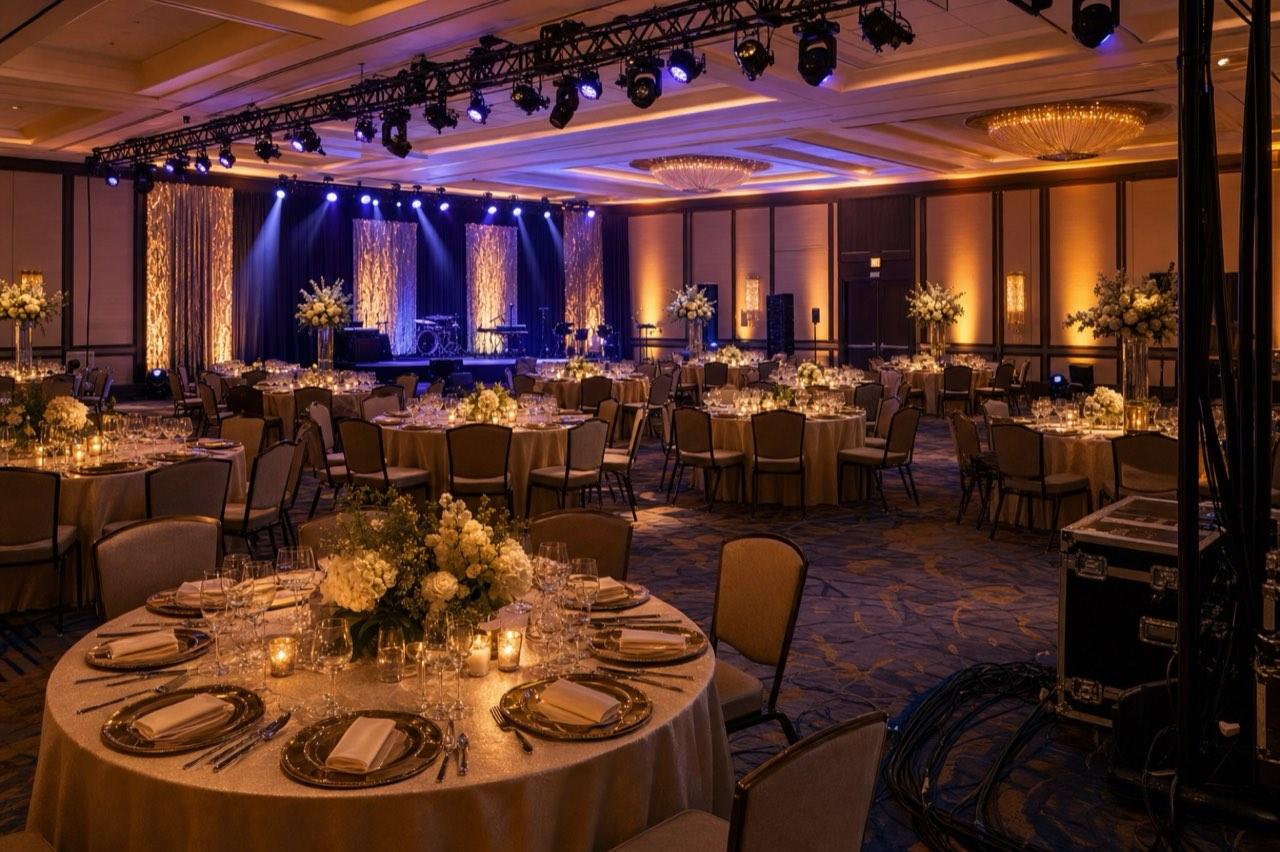
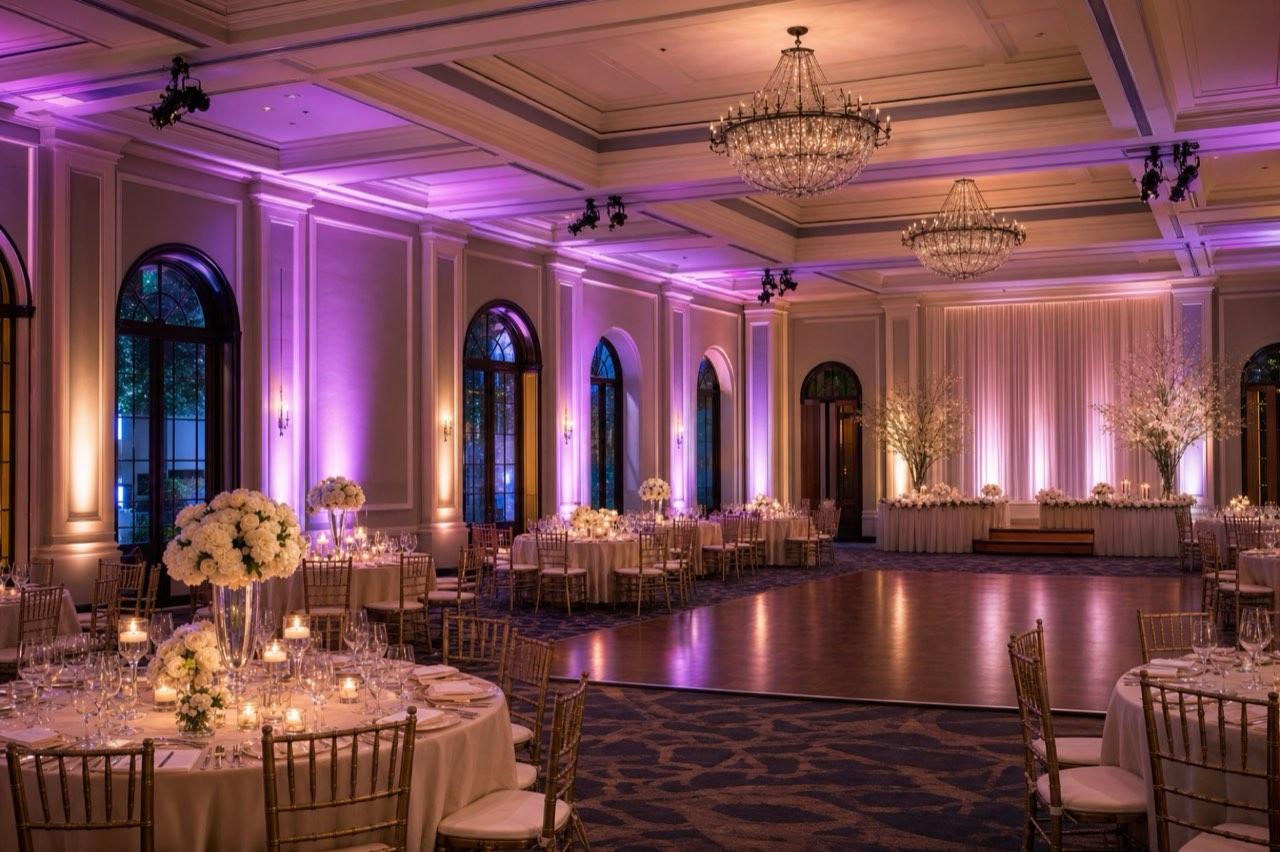
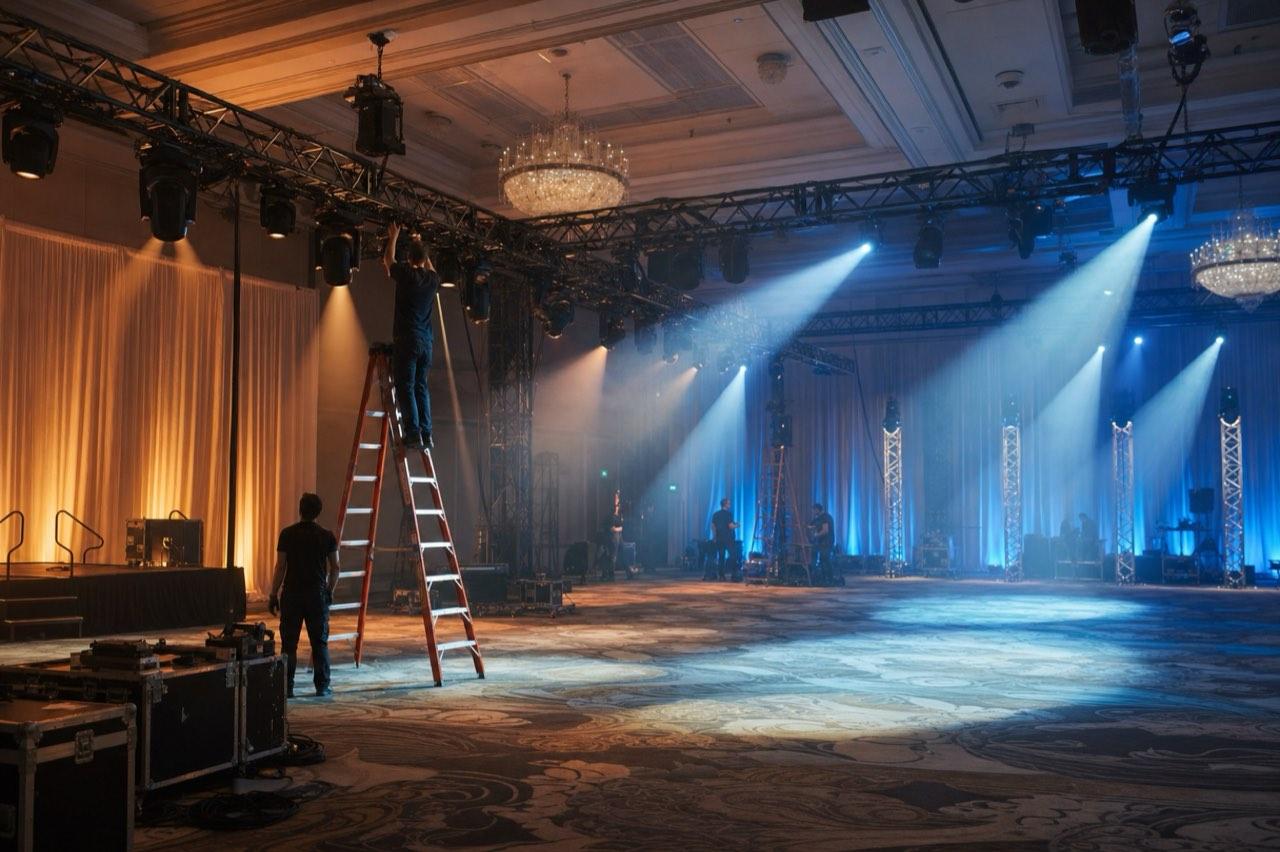
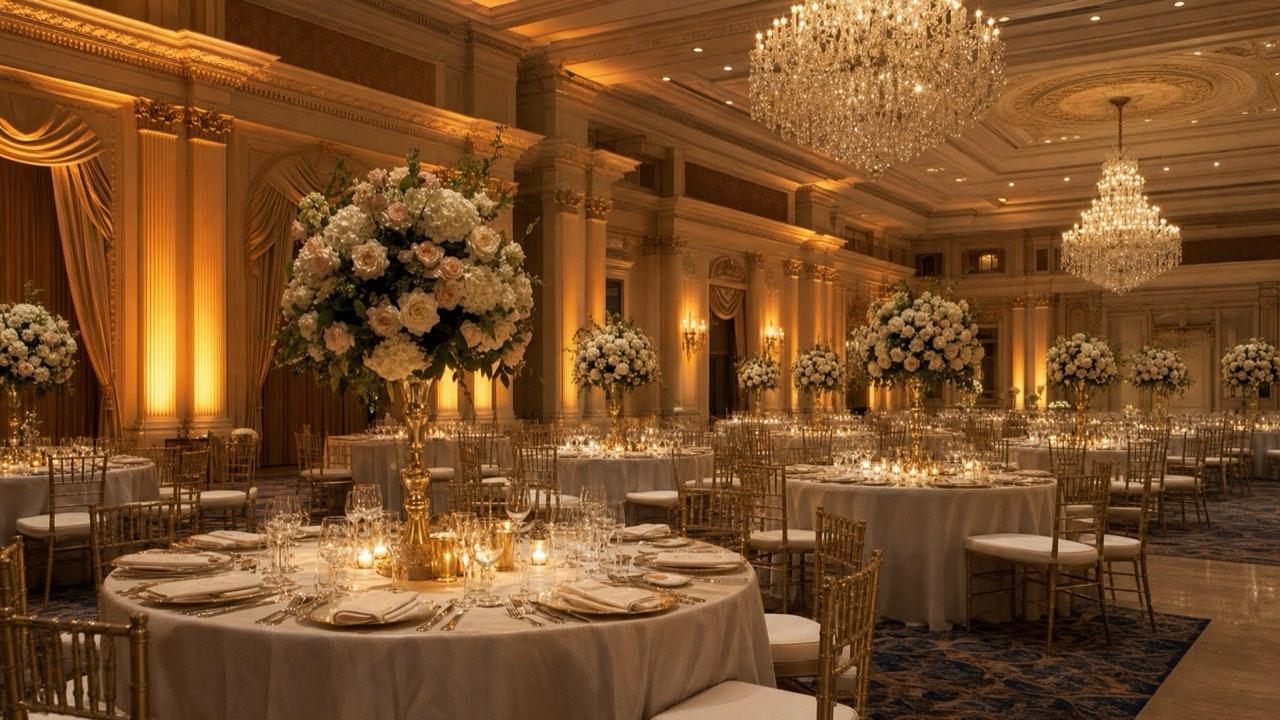
You walk into a ballroom at 6:00 a.m., the carpet still smells like last night’s banquet, and the room is a blank beige box with a low ceiling and a strict power limit. The client wants warm uplight on columns, a clean stage wash for a keynote, and a couple of texture hits on pipe-and-drape. In that moment, the question isn’t philosophical. It’s practical: do we hang LED PAR fixtures, or do we break out traditional PAR cans and dimmers?
Both tools still have a place in real event work. But they solve different problems, and the wrong choice shows up fast: blown power budgets, uneven color on camera, melted gels, dead zones in the room, or a crew chasing flicker at doors. Here’s how we think about LED PARs versus legacy PAR cans when we’re speccing corporate, gala, and live-event lighting.
the job of a par fixture in event lighting
In event land, “PAR” usually means one of two things:
- A traditional PAR can (an aluminum housing) using a tungsten-halogen lamp like a PAR64, typically color-corrected with gel
- An LED PAR fixture that uses an LED engine and lenses to produce a similar beam family (often with RGB, RGBA, RGBW, or more complex mixes)
Functionally, we use PAR fixtures for the boring-but-critical work:
- stage wash (front and top)
- uplighting and room color
- scenic wash and drape light
- texture and accent with barn doors or top hats
A PAR isn’t the “wow” fixture. It’s the fixture that makes the room look intentional. When you spec the right PAR, the room feels finished even before the moving heads start doing anything.
power and heat: the first reason led pars took over
Traditional PAR cans are simple: lamp, reflector, housing, cable, and a dimmer somewhere. But they’re also hungry. A common real-world setup is 500W or 1000W lamps. Multiply that across uplights, truss washes, and scenic hits, and your power math gets ugly in a hurry.
LED PARs changed the game because they give you useful output at a fraction of the draw. That impacts everything upstream and downstream:
- Power distribution: fewer circuits, smaller feeder, less load management
- Heat: less heat blasting into soft goods, set pieces, or low ceilings
- AC load: reduced HVAC stress in rooms that already struggle
- Cable runs: fewer home runs to dimmer land
Heat is not a comfort issue. It’s an operations issue. In tight ballrooms, a row of tungsten PARs can raise the temperature around the stage enough to make talent uncomfortable and cameras noisy (because you’re pushing ISO to compensate for uneven wash). LED fixtures keep the stage calmer and more predictable.
color: gels versus mixing engines
Traditional PAR cans are still hard to beat for one thing: a simple, warm tungsten source with a gel can look fantastic. The output is continuous-spectrum in a way that can be forgiving on skin tones and cameras. If you’re lighting faces for a gala host or a singer, “warm tungsten with diffusion” can be a clean, flattering look.
LED PARs give you flexibility: you can go from warm amber to deep blue to a corporate brand color in seconds, without touching the fixture. That’s why LED PAR uplighting is the default now. But flexibility comes with tradeoffs:
- Poor color rendering on cheaper fixtures (skin looks gray, reds look muddy)
- Green/magenta shifts between fixtures from different batches
- White quality that isn’t actually “white” unless you have a true white emitter
When we spec LED PARs for rooms where cameras matter, we care less about “RGB rainbow” and more about whether the fixture has an engine that can produce clean whites and consistent pastels. RGB-only can get you through uplight and drape. It’s riskier for front wash. RGBW or fixtures with additional emitters (like amber, lime, cyan) generally behave better when you’re trying to match camera white balance and keep faces from looking sick.
dimming: smooth fades versus stepping and dropouts
Tungsten dimming is naturally smooth. That’s why old PAR cans still feel good in theater-style cues. At low intensity, you get warm dimming as the filament cools, which can look organic.
LED dimming depends on the fixture’s electronics. Good LED PARs fade smoothly down to 1% without stepping, and they handle slow cue timing cleanly. Weak ones stutter, snap off, or show a visible “ladder” as you fade. That’s not just an aesthetic problem. It’s a rehearsal problem. If your LD can’t trust fades, you lose time babysitting cues instead of building looks.
If the show needs elegant cueing (walk-ons, award intros, and slow build music cues), we spec LED PARs we know can dim well. If we can’t guarantee that, and the power math allows it, tungsten PAR cans with a real dimmer rack can still be the safer path for stage wash.
flicker: the silent killer on camera
If you’ve ever had a client call out “banding” on the IMAG screens or noticed rolling bars on camera, you’ve met flicker the hard way. Tungsten lamps are generally flicker-friendly because the filament doesn’t turn on and off between AC cycles in a way that the camera sees.
LED fixtures can flicker if their PWM frequency and the camera shutter don’t play nicely together. Most professional LED PARs have high-frequency drivers or camera modes that mitigate this. But you still have to pay attention, especially when:
- shooting with high shutter speeds
- doing slow-motion capture
- mixing camera systems
- running LED fixtures at very low intensity
Our operational rule: if cameras are involved, we test LED PARs early in the day with the actual camera settings. If you wait until the first rehearsal, you’re too late.
output and beam control: “brightness” is not one number
A PAR can throw a lot of punch in a narrow beam. A PAR64 NSP (narrow spot) is a very specific tool. If you need a hard-edged beam to hit a cyc or blast a scenic element, old school cans can still do work.
LED PARs vary wildly in optics. Some are wide and smooth for uplighting. Some have interchangeable lenses. Some have zoom. The key is matching the beam to the task:
- Uplighting usually wants a wider beam and even field, so you’re not painting hot spots up the wall
- Stage wash usually wants a controllable field so you can avoid blasting the first row or washing out screens
- Scenic hits may want a tighter beam, especially if you’re highlighting specific brand elements
A common failure mode: LED PAR uplights that look great on walls end up being useless as stage wash because the beam is too wide and the fixture doesn’t have enough intensity at distance. Another failure mode: fixtures with lots of intensity but ugly multi-shadow artifacts.
We don’t buy into “this fixture is bright” as a spec. We look at distance, trim height, beam angle, and the surface we’re lighting.
control and cabling: dmx simplicity versus distributed systems
With traditional PAR cans, you usually run power to dimmers and run DMX to the dimmers (or a dimmer-per-circuit situation). The cans themselves are dumb. That can be a feature: fewer points of failure in the air.
LED PARs need constant power and DMX (or network) directly to each fixture. That changes your cable plan:
- more data runs and more addresses
- more power in the air (but less total wattage)
- more attention to data distribution and termination
In ballrooms where the rig is ground-supported or pipe-and-drape, cable management becomes a bigger part of the show looking professional. LED PARs can make cable management easier because you can run power and data daisy chains cleanly, but it depends on fixture design and how disciplined the crew is with home runs and loops.
maintenance and reliability: lamps fail, electronics fail differently
A tungsten PAR can is brutally simple. If the lamp pops, you swap it. If a connector fails, you fix the connector. The fixture body lasts forever if you don’t abuse it.
LED PARs remove lamp changes, but they introduce electronics and thermal management. Failure tends to look like:
- a driver failure (fixture dead)
- a color channel failure (fixture weirdly tinted)
- fan problems (fixture throttles or shuts down)
In production terms, a lamp change is a known known. Electronics failure is more unpredictable. That’s why our spec always includes spares, and we avoid mixing fixture families unless we’ve tested color matching and control behavior.
when we still choose traditional par cans
We don’t default to tungsten PAR cans often, but there are real cases where we’ll still deploy them:
- The show needs extremely smooth theatrical dimming and the cueing is subtle
- The look needs classic tungsten warmth and we want the “warm dim” behavior
- We’re in a venue with a proven dimmer infrastructure and power is not constrained
- We need narrow-beam punch for a specific scenic hit and LED optics aren’t giving us the same result
This is usually a deliberate choice for a stage wash or a key scenic layer, not for the whole room. And if we go that route, we plan the heat and power like adults: it’s not “just a few cans.”
when led pars are the obvious call
Most of the time, LED PARs are the right tool because they solve the bigger operational problems:
- Uplighting and room color with fast adjustments and consistent coverage
- Corporate events where branding colors change per segment
- Ballrooms with strict power limits and limited circuit access
- Fast turnarounds where you don’t want crews handling hot fixtures and gels
If the room has multiple looks (general session, awards, afterparty), LED PARs let you re-balance the room quickly without physically reworking gels. That’s not a luxury. That’s time you get back during rehearsal.
spec’ing led pars for real events: what we look at
If you’re comparing LED PAR fixtures, ignore the marketing adjectives and look for operator specs that actually change your day:
- LED engine type: RGB-only vs RGBW vs multi-emitter engines
- Color consistency: how well units match each other at low intensity
- Dimming behavior: smooth fades, no stepping, reliable at 5%
- Flicker performance: camera-friendly modes and high-frequency drivers
- Optics: beam angle options, lens swaps, or zoom
- Control modes: DMX footprint and whether simple modes still look good
- Noise: fan noise matters for quiet keynotes and recordings
Here’s a short checklist we use when we’re planning a mixed ballroom package (uplight plus stage wash):
- We pick uplights with a wide, even beam and clean pastel mixing
- We pick stage wash fixtures with better white quality and better dimming
- We test with the actual cameras if the show is streamed or has IMAG
- We build in spares so one dead fixture doesn’t break the look
mixing fixtures: the fastest way to create color problems
Mixing a couple of different LED PAR models in one room can be fine if you treat them as different layers. The mistake is pretending they’re interchangeable.
If you uplight with one fixture family and wash the stage with another, you can manage it. But if you’re washing the same drape line with two different fixture families, you’ll see mismatched color and you’ll lose time fighting it.
Our approach is to standardize per layer. One type for uplight. One type for stage wash. One type for scenic hits. Then we build the cueing around those layers so the room feels consistent even when colors shift.
what this means for budgets and planning
Even though we’re not getting into pricing, the planning implications are real. LED PARs usually reduce your needs elsewhere: fewer circuits, fewer dimmer channels, less time in the air, less time handling gel cuts, and fewer “we need another 20A here” moments during load-in.
But you still have to plan thoughtfully:
- LED PARs can increase the amount of data planning (addresses, universes, cable paths)
- Better fixtures matter if cameras matter
- You still need beam control (barn doors, top hats, or optics) to keep looks clean
If you plan the show like it’s “just uplighting,” you’ll end up with a room that photographs okay but doesn’t play well on stage. If you plan it like an integrated system, PAR fixtures become the backbone of a clean, repeatable look.
the bottom line
Traditional PAR cans are simple, predictable, and still great at what they do: warm, smooth tungsten light with clean dimming. LED PARs are the modern default because they solve power, heat, and flexibility problems that show up on almost every corporate and gala job.
The right choice depends on what you’re protecting: power, time, camera quality, cueing smoothness, or a specific look. When we spec a room, we’re not choosing a “better” fixture. We’re choosing the fixture that reduces risk for the run of show.
If you want EventProSource to spec the PAR and wash layers for your event, we can build a plan that covers power, camera considerations, and cueing behavior. Email hello@eventprosource.com for a 24-hour quote and a practical recommendation based on your run of show.