Concert PA Design: Coverage Versus SPL
A concert mix falls apart when coverage is uneven, not when the PA is ‘too small.’ Here’s how we design for intelligibility first, then loudness.
You can run a concert PA hot and still lose the room. The first complaint won’t be that it wasn’t loud enough. It’ll be that the vocal disappeared, the front was painful, the back was mush, and the subs turned into a single-note rumble. That’s coverage versus SPL in real life: if the audience doesn’t hear the same show everywhere they stand, more level just makes the weak spots louder.
start with the audience map, not the box count
Before we talk about arrays, amps, or how many subs we can fit, we start with the audience geometry. Where are people actually going to stand, and what’s the furthest listener position that matters. A 3,000-cap outdoor plaza with a hard stop at FOH is a different problem than a long tent or a shallow amphitheater bowl.
We’ll rough out three zones early:
- nearfield: barricade to about 10–15 ft
- main field: the bulk of standing audience and FOH
- farfield / bleed: the edges, VIP risers, or the hill beyond FOH
That map drives everything else: throw distance, splay strategy, and whether we need fills to keep the first 3 rows from getting hammered while the back still hears the vocal.
define what “good” means: intelligibility targets and a realistic SPL plan
“SPL” is a number, but a show is a feeling. We still need targets, though, because they steer decisions about headroom and coverage density. The mistake we see is treating an SPL target as the whole design.
We frame targets like this:
- mix position target: what the show needs to feel like at FOH
- front-of-house comfort: what’s acceptable at barricade without punishing people
- back-of-house minimum: the lowest acceptable level at the furthest meaningful listener
- spectral balance: does the low end stay proportional as you walk
If the goal is “keep the vocal intelligible everywhere,” we’ll prioritize consistent mid/high coverage and controlled low-frequency buildup. If the goal is “high-impact EDM outdoors,” we’ll still chase consistent mid/highs, but we’ll plan more low-frequency displacement and more power reserve so we’re not running subs at the ragged edge.
coverage is a physics problem; SPL is a budget and headroom problem
Coverage is mostly geometry and pattern control. SPL is mostly displacement, amplifier power, and headroom. They overlap, but they don’t substitute for each other.
A clean way to think about it:
- If the room sounds uneven, you’re usually dealing with coverage, interaction, or timing.
- If the room sounds strained, you’re usually out of headroom somewhere (tops, subs, or both).
When we design, we assume we’ll need to hit peak moments without flattening transients. That means not running the system at 0 dB to feel “big.” We’d rather deploy enough rig so the mix lives in the comfortable part of the system’s performance envelope.
choosing between point source, line array, and hybrid approaches
Not every concert needs a line array, and not every line array behaves the way people expect. The right choice depends on throw, trim height, and whether we can physically place the PA where it needs to be.
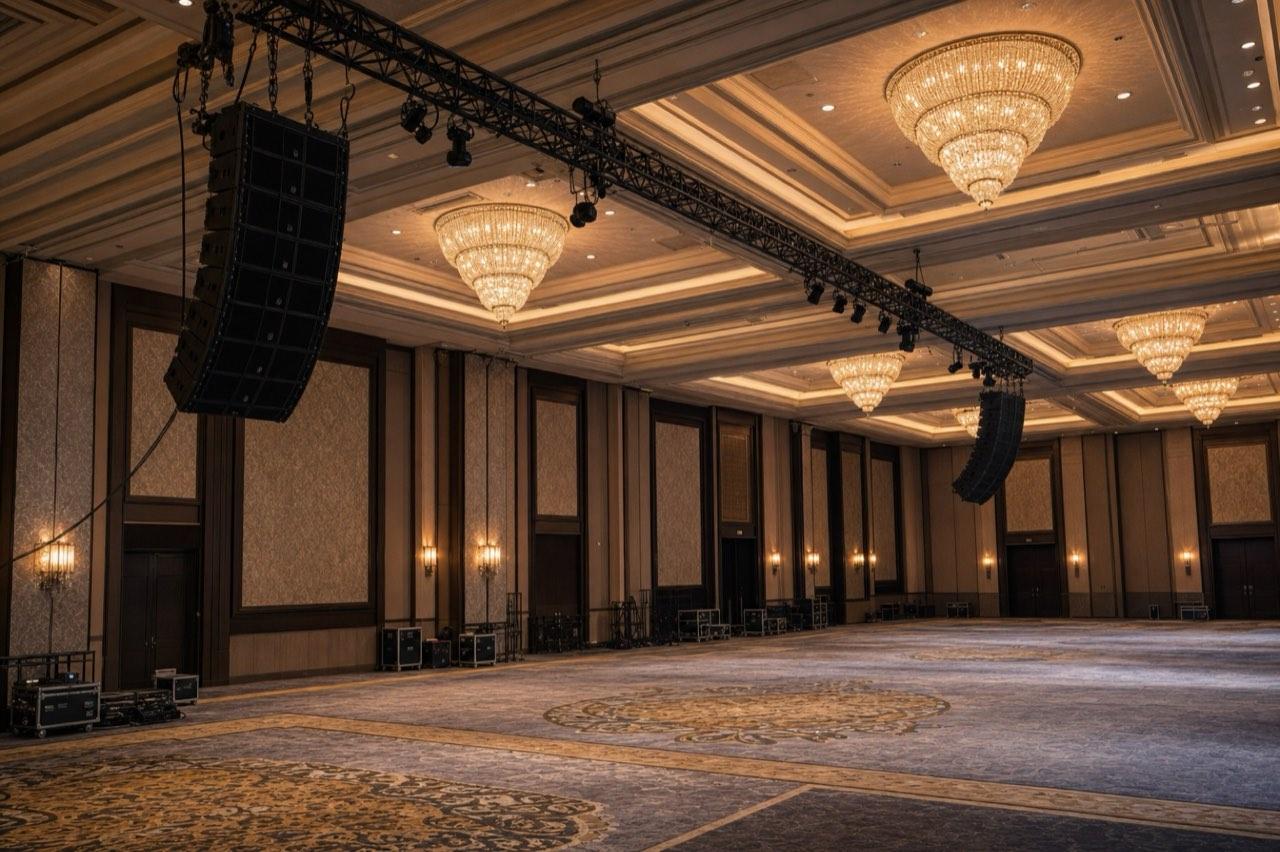
Point source (or small format arrays) can be great when the audience area is compact and wide, when you can get the boxes high enough to clear the first rows, and when you want a coherent, simple deployment.
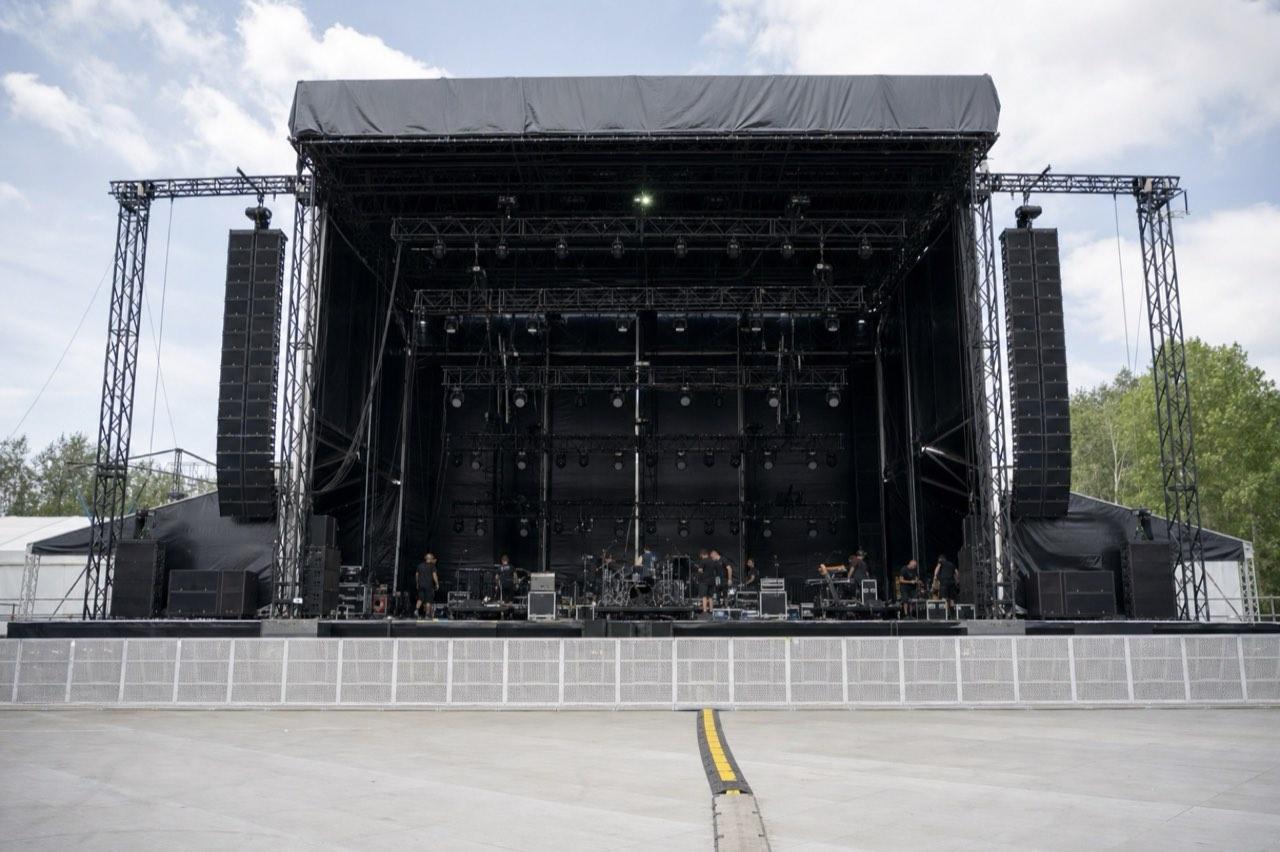
Line arrays help when you need controlled vertical coverage over distance, when you need the option to vary splay angles to match the audience plane, and when you’re dealing with longer throws. But they only do that job well when the array is long enough, trimmed correctly, and processed as a system.
Hybrid setups (main arrays plus front fills and/or delays) are common when a single solution can’t cover the entire geometry cleanly.
The trap is picking an approach based on “this is what big shows use” instead of what the venue geometry requires.
array length, trim height, and splay: where coverage gets won or lost
If you’re using a line array, the design conversation usually comes down to three levers:
- Array length: longer arrays generally control vertical dispersion lower in frequency and keep energy where you want it.
- Trim height: higher trim can help you clear nearfield heads and reduce front-row punishment, but can also push coverage long and create a hole close-in if you don’t manage angles.
- Splay strategy: tight angles for long throw, wider angles for nearfield.
We don’t chase a perfect prediction model on paper and call it done. We aim for a configuration that’s robust to real-world imperfections: wind, temperature gradients, crowd absorption, and last-minute stage placement changes.
A practical check we like: if a small shift in hang point creates a huge prediction swing, the design is too fragile. We’d rather add a fill or adjust trim so the system is forgiving.
front fills and out fills: the coverage “patch kit” you should budget for
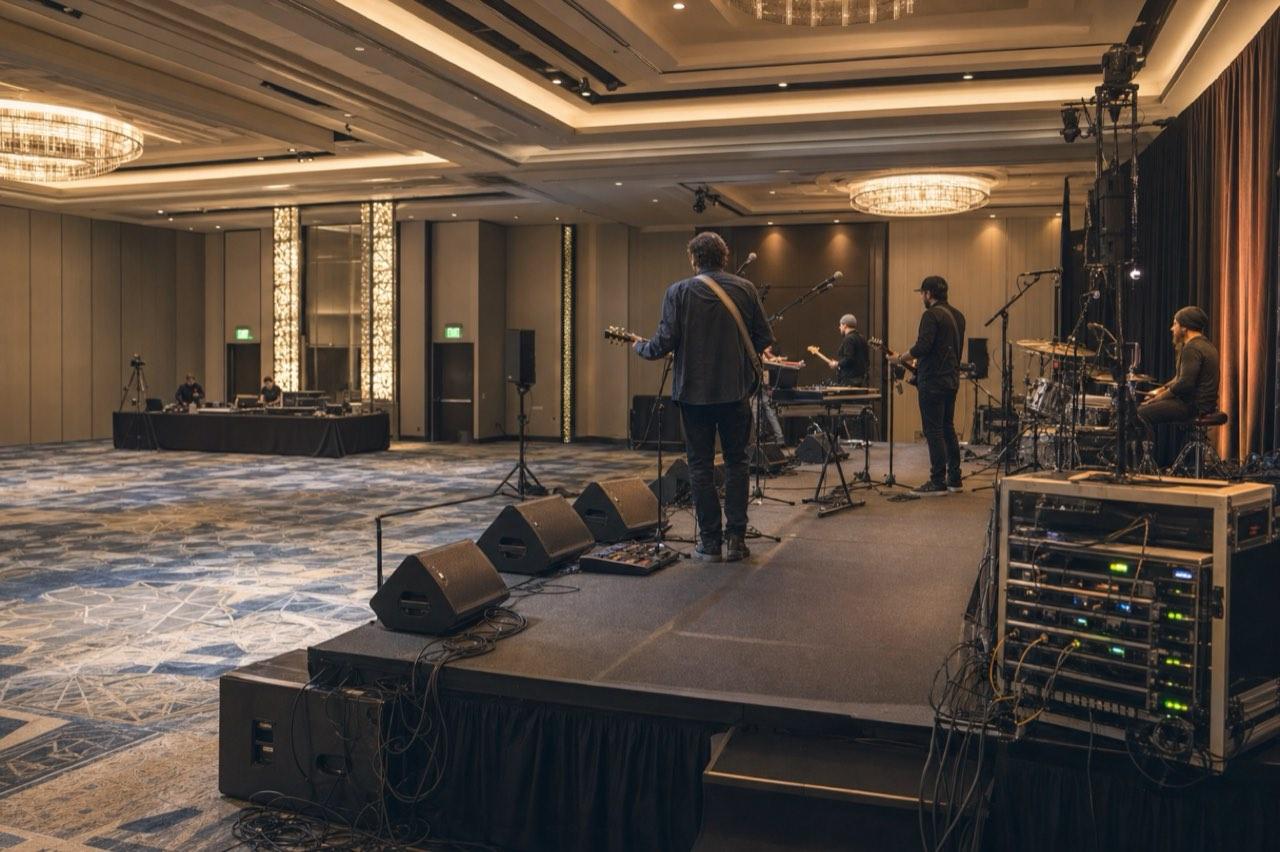
Front fills and out fills don’t exist because the mains are bad. They exist because stages, barricades, and sightlines force compromises.
Front fills handle the first 1–3 rows where the mains are overhead and sometimes too directional. Out fills catch the wide edges where the mains naturally fall off, especially in shallow wide audience shapes.
Here’s the short list of what we’re trying to prevent:
- a vocal gap in the first rows
- harsh cymbals up front because only HF is reaching
- the outside edges hearing “just subs”
- people in the center hearing the show, people 30 ft left hearing a different show
We keep fills subtle. The goal isn’t to make the front louder. The goal is to make the front match the tonal balance of the mains.
delays: when they help, and when they create more problems than they solve
Delay hangs (or delay stacks) are useful when the audience area is long enough that the mains can’t cover the back without overcooking the front. They’re also useful when the main PA placement is constrained and you need to carry intelligibility further.
But delays are not a free win. They require clear placement, clean sightlines, and careful timing. If the delay system is too loud or mistimed, the show turns into a smear and people localize to the wrong source.
When we add delays, we do two things on purpose:
- We choose the handoff zone: where the delay becomes dominant.
- We align for clarity, not just a measurement: the timing should feel natural at the handoff, not just look good at one mic position.
subs: coverage, coupling, and the reality of low-frequency “wander”
Low end is where “coverage versus SPL” gets emotional. It’s also where producers get surprised because subs behave differently than tops.
A few realities we plan around:
- Low frequencies are less directional unless you intentionally steer them.
- Ground coupling is powerful: ground-stacked subs can deliver a lot of output efficiently, but you’ll also excite the site.
- Array interaction changes everything: spacing and geometry can create hot spots and nulls that no EQ fixes.
If the goal is even low end, we’ll often prefer a cardioid or steered approach when the site and inventory allow it, especially when stage bleed and neighborhood spill matter. If the goal is maximum impact and the site can take it, we’ll still keep spacing disciplined so we’re not creating giant nulls in the audience.
power and headroom: the quiet reason systems distort
When the PA sounds harsh or “pinched,” it’s not always the box. It’s often power delivery, gain structure, or a system being pushed beyond its clean range.
We check headroom in three places:
- Amplifier reserve: are we living at the top of the amp for the whole show
- Processing headroom: are we clipping DSP or driving limiters constantly
- Console and drive chain gain structure: are we chasing level with trims instead of system gain
From a production standpoint, this is why we like to spec with margin. If a touring act walks in with hotter stems or the weather shifts and you need more level, we don’t want the system to fall apart.
measurement and tuning: what we do quickly, and what we don’t overthink
On-site tuning isn’t a mystical ritual. It’s a fast, disciplined process that prioritizes coverage and consistency.
We’ll typically do:
- confirm polarity and routing
- verify delay timing relationships
- set system EQ to correct broad issues, not to “mix”
- walk the audience area and listen for coverage holes
We don’t chase a single perfect curve at one position. If the mix position is perfect but the sides are a different show, we keep working. The producer experience is what matters: predictable sound across the room so the mix translates.
the producer decisions that change the PA outcome more than you think
Some outcomes get blamed on “the PA” when they’re really about constraints. A few producer-level calls have a big impact on whether coverage wins:
- FOH location: put FOH in a representative coverage zone, not in a hole
- Stage placement: small shifts change sightlines and hang points
- Barricade and pit layout: affects nearfield fills and aiming
- Video wall and scenic: can block PA placement or create reflections
- Show schedule: tuning time matters, especially outdoors
If you tell us early that you’re adding a thrust, a VIP riser, or a scenic wall that eats the PA wings, we can design around it. If we find out at load-in, we can still adapt, but the solution may involve more fills or compromises.
quick spec conversation: the questions we’ll ask before we lock the design
When you ask us for a concert PA, we’ll push for specifics because that’s how we protect coverage and keep SPL where it should be. Expect questions like:
- What’s the audience footprint (width, depth, and any weird corners)
- Indoors or outdoors, and what’s the nearest reflective boundary
- Where is FOH and can it move
- What’s the stage height and trim height available
- Any noise constraints or neighborhood concerns
- Are you carrying opener to headliner on the same rig
If you’ve got a plot or a photo of the site, even a rough one, it speeds everything up.
how we think about “enough”
We don’t spec for bragging rights. We spec for a show that feels consistent, hits the moments, and stays listenable. When coverage is right, you don’t have to punish the front to reach the back. When headroom is right, you don’t have to live in limiters to feel impactful.
That’s the balance: coverage makes the show translate. SPL makes it feel like a concert. You want both, but coverage is the foundation.
If you want EventProSource to spec the concert PA design for your event, we can build a plan that covers main coverage, fill strategy, and power/headroom so the mix holds together from barricade to the back. Email hello@eventprosource.com for a 24-hour quote and a practical recommendation based on your run of show.