Corporate DJ Services: Music, Mics and the A/V Handoff
What a corporate DJ should cover: MC levels, a mic count worksheet, backup playback, the handoff to the A1 and stream, and a one-page brief.
A "DJ" on a corporate quote can mean a laptop and a speaker, or it can mean the person who runs the sound of the room from doors to last song: walk-in music, awards stings, mic work and a clean feed to whoever is streaming the program. Planners usually learn which one they bought on the day, when the CEO's walk-up music is playing through a mixer that nobody told to carry the mics.
Before you ask for a quote, decide what corporate DJ services have to cover: how much MC you need, how many mics, what backup to require, and where the DJ's job ends and the audio engineer's begins. Write that down once and quotes become comparable.
What do corporate DJ services cover, moment by moment?
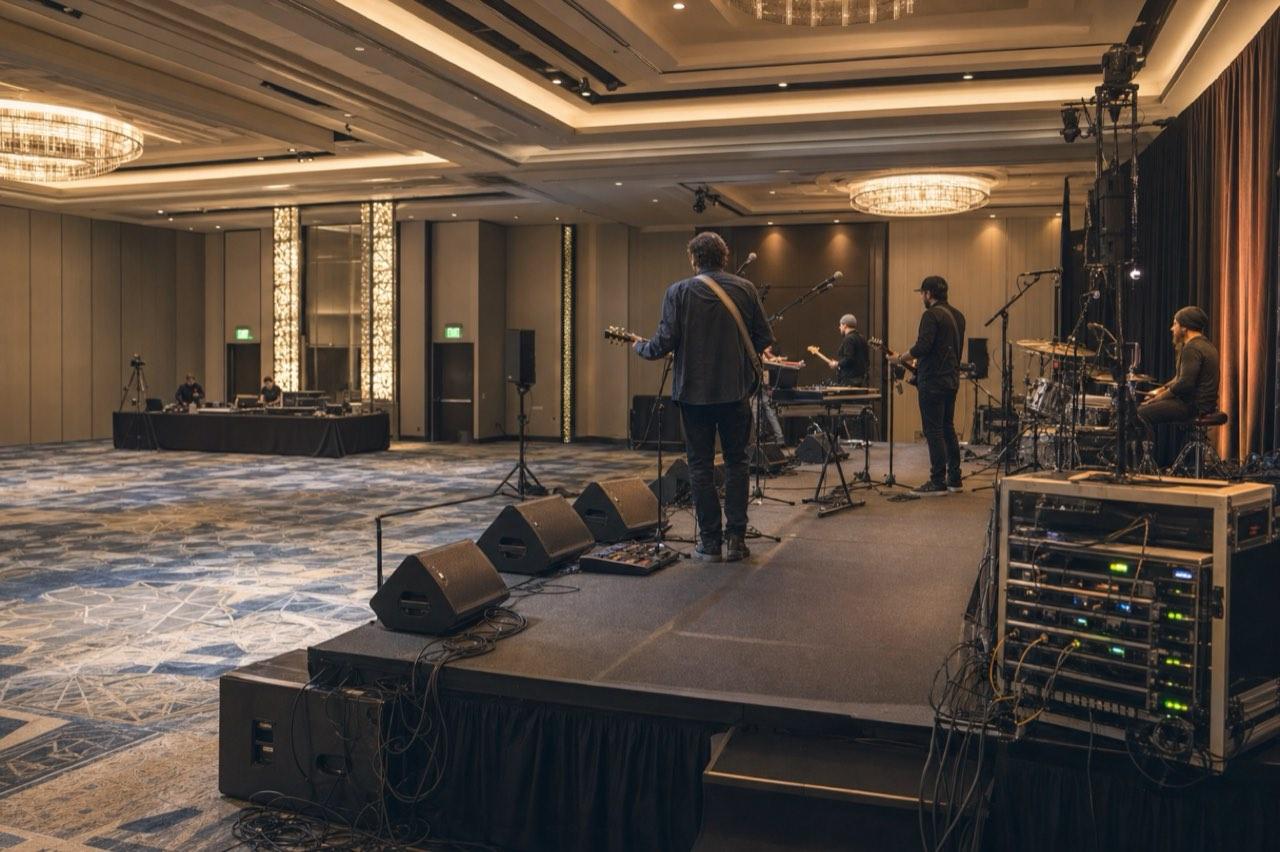
A corporate DJ runs the sound of the room between speakers: walk-in and walk-out music, transitions into breakouts and awards, mic handling, and the after-party, with the feed handed to the audio engineer when the program is on stage. The scope is a list of moments, not a block of hours.
The table below is the version we'd paste into a run of show. Each row is a moment where the music or the mic changes what the room does.
| Moment | What the DJ does | What to tell them |
|---|---|---|
| Walk-in and registration | Sets the tone while the room fills, at a level people can talk over | Genre limits, clean edits only, a tone word (calm, upbeat), brand-approved music if you have it |
| Session start and end | Brings music down for the opening speaker and back up at the close | Who gives the cue and how (comms, hand signal, a named producer) |
| Breakout changeovers | Covers the movement between rooms or sessions | Number of changeovers and their run-of-show times |
| Awards and stings | Plays a sting per winner or category, runs walk-up music | Audio files for each sting, the order of names, pronunciation notes |
| Networking hour | Background music that stays under conversation | A restrained brief; this is not the after-party |
| After-party | Builds energy, takes requests inside your limits | Must-play, preferred and do-not-play lists |
Energy is the variable. A launch or a closing party can run high. A keynote arrival and a networking hour should not. If one DJ covers both, say where the line is in the run of show. Our DJ services for corporate events page lists the same moments as the standard program; the point here is to put your own times against them.
How much MC do you need?
Decide this before you ask for a quote, because it changes who holds a microphone and who writes the script. There are three levels, and they scope differently because they use different amounts of the DJ's attention.
| Level | What it covers | When it fits | What it changes in the run of show |
|---|---|---|---|
| Full MC | Hosts the program: welcomes, bridges between speakers, reads housekeeping, runs awards | Galas, award nights, all-hands with no internal host | Needs a script and a named owner for it |
| Name-reads only | Reads names and titles at awards or introductions, nothing else | Recognition moments inside a program someone else hosts | Needs a list of names with pronunciations, in order |
| Presenter-mode intros | Short introductions of speakers and session starts | Conferences with a moderator but no host | Needs a speaker list and timing for each handoff |
If you want a dedicated MC besides the DJ, that's a separate person we can staff and coordinate with cue tracking. It's the right call when the program is long, the host needs to work the room, or the DJ will be busy with music changes while the program is moving.
Whichever level you pick, put one person in charge of the script. Two people editing it in the hour before doors is how a name gets read wrong. Give pronunciations in the run of show, in writing.
Mic count and RF: count every voice
How many mics does a corporate DJ package need? The count follows the program, not the DJ. Count every person who speaks, then add the spare.
A planning example for an awards night with a lectern and audience Q&A:
- One handheld for the MC
- One spare handheld, powered on and on the same frequency plan
- One lavalier for the presenter or award host who needs both hands
- One podium mic if there's a lectern
- One audience mic for Q&A, handed out by a stagehand
That's a worked example, not a rule for every event. A conference with six panelists needs a different list. The useful habit is to build the list from the speaker schedule and send it with the brief, so the audio engineer can plan channels and spares around it.
Wireless mics share the air with every other wireless device in the room: in-ear monitors, camera links, intercom, the venue's own system. The DJ services page also lists Shure ULXD or Sennheiser EW-D handhelds and lavs, and each channel has to be coordinated against the rest of the show. The channel plan is the audio engineer's job, and it needs the total count early. The method is in wireless microphone frequency coordination.
Playback, do-not-play lists and backup
What should you require so the music doesn't stop? Three things: a mirrored playback rig, a second source, and a written music list.
Redundancy. Ask for playback mirrored on a backup laptop, dual USB drives, and hot-swap channels on the mixer. The equipment list on the DJ services page names Serato or Rekordbox for playback and a Pioneer DJM-A9 or DJM-900NXS2 mixer. We source the DJ and the gear for each room, so ask which rig is coming and what the backup is. What you want to read in the quote is that the backup runs on a mirrored rig, not that someone will "have a second laptop in the car."
Music lists. Ask for three lists: must-play, preferred and do-not-play. If your company has brand-approved music guidance, send it. The lists should say what is off limits as well as what is wanted.
Three corporate habits we recommend as general production practice:
- Ask for clean edits only. A room that includes clients and senior leadership is not the place for explicit lyrics.
- Agree a date for the final lists in the run of show, and treat later changes as exceptions.
- Supply stings and bumpers as audio files, not links to a streaming page. A link needs a network and a login at the worst possible moment.
The A/V handoff: where the DJ ends and the A1 begins
This is the part most DJ-only quotes skip, and it's where corporate events go wrong. The DJ's mixer and the house PA are different systems with different owners. When a speaker takes the stage, someone has to decide who runs the room. When there's a camera, a livestream or a recording, someone has to decide where the program audio is tapped.
| Handoff point | Who owns it | What to confirm |
|---|---|---|
| DJ mixer to house PA | The audio engineer (A1) sets house levels; the DJ sends a clean line | Who sets the volume limit, and who is allowed to change it |
| Program feed for IMAG, streaming and recording | The A1 takes a program feed from the DJ's mixer | That a feed is in scope and what it carries: music only, or music plus the MC mic |
| Speaker mics | The A1 | Speaker mics go to the A1's console, not through the DJ's mixer |
| MC mic | Either, by agreement | Which console it lives on, and who mutes it |
| Cue calls | The producer, on production-heavy events | Who calls cues to the DJ and over which comms channel |
| Takeover when the program is on stage | The A1 | When the DJ's sound drops out and when it returns |
Add one more line to your checklist: ask who is on comms. A DJ working from a laptop in a corner with no headset can't take a cue, and that is a scope gap, not a personality problem.
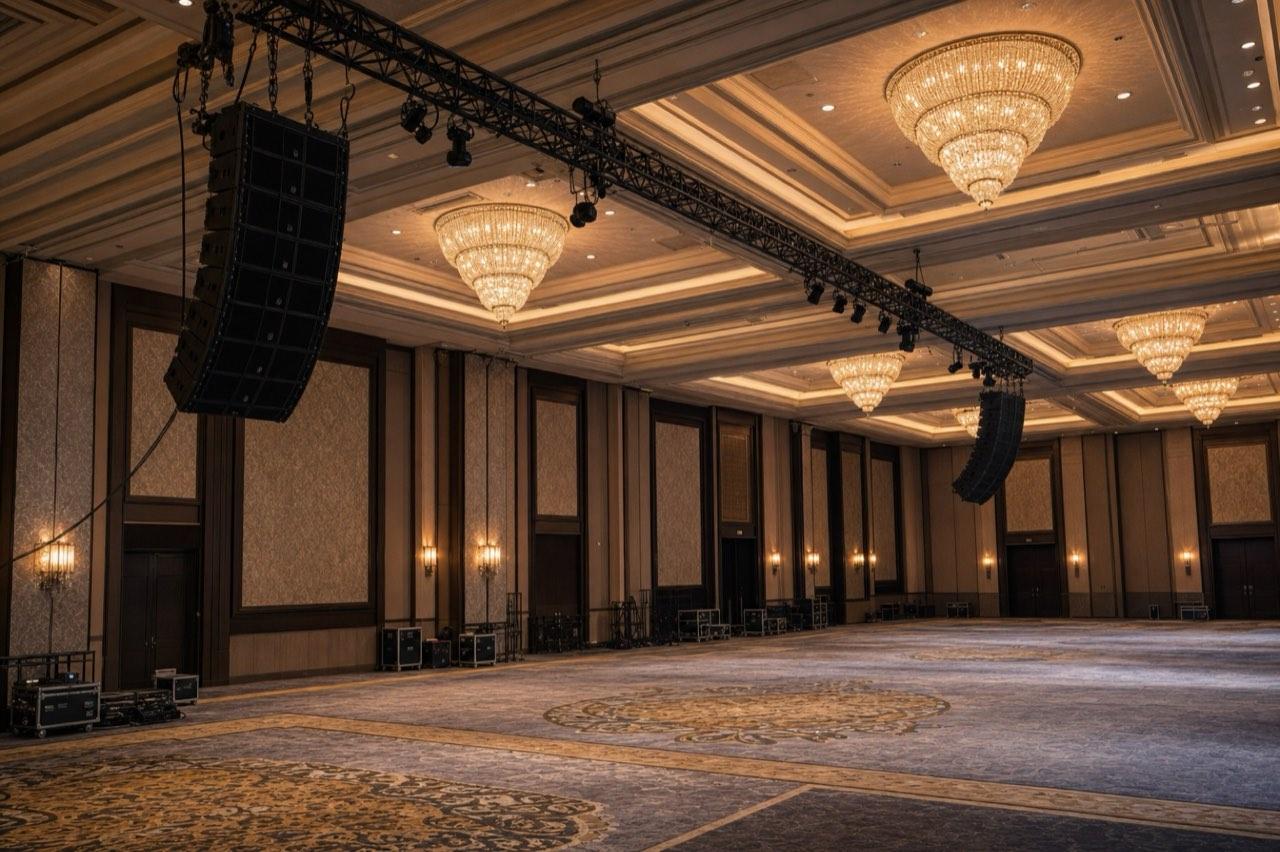
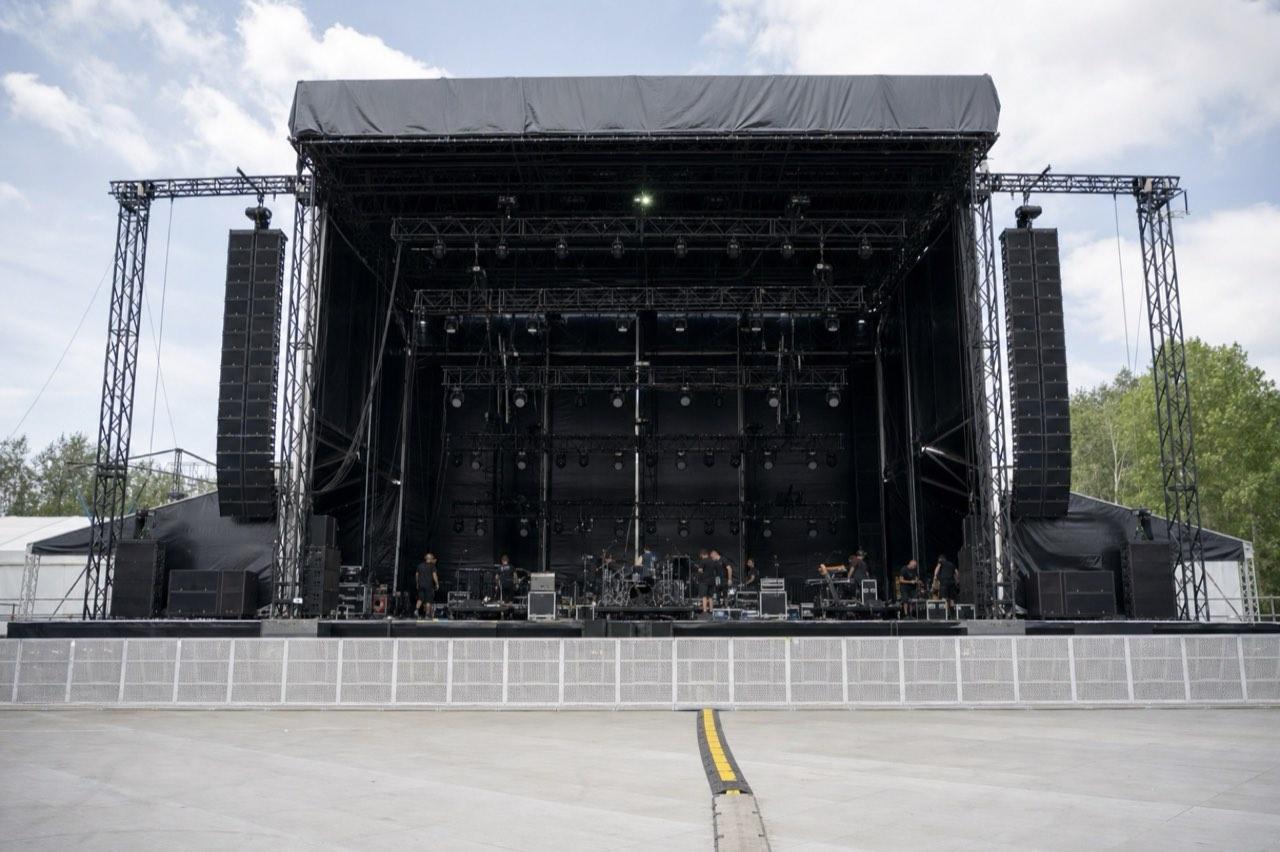
If the room also has a separate sound system rental, put the DJ's feed on the same plan as the rest of the audio. For streamed events, the feed has to be clean enough to mix with the speakers; the standards are in broadcast-grade audio for streamed events, and the handoff gets tested in runtime, rehearsal and tech checks. If a stream is part of the program, scope it with the live streaming services team in the same brief.
Send the handoff table to your A/V producer with the brief.
Streamed or recorded events and music rights
Music in a stream or a recording raises a rights question that a DJ-only vendor often can't answer. ASCAP states that a public performance includes places where a substantial number of people outside a normal circle of family and acquaintances gather, and that the law covers streaming, DJs and live musicians. A business needs a licence from each performing rights organization that represents the music it plays (ASCAP, Music Licensing FAQs, read November 28, 2026).
This is practical advice, not legal advice. Ask the venue which licences it holds. Ask the DJ whether any music will land in a stream or a recording. If it will, decide in advance to keep those segments to music you have cleared, and don't assume the venue's licence covers the stream.
Booth, lighting and the look of the room
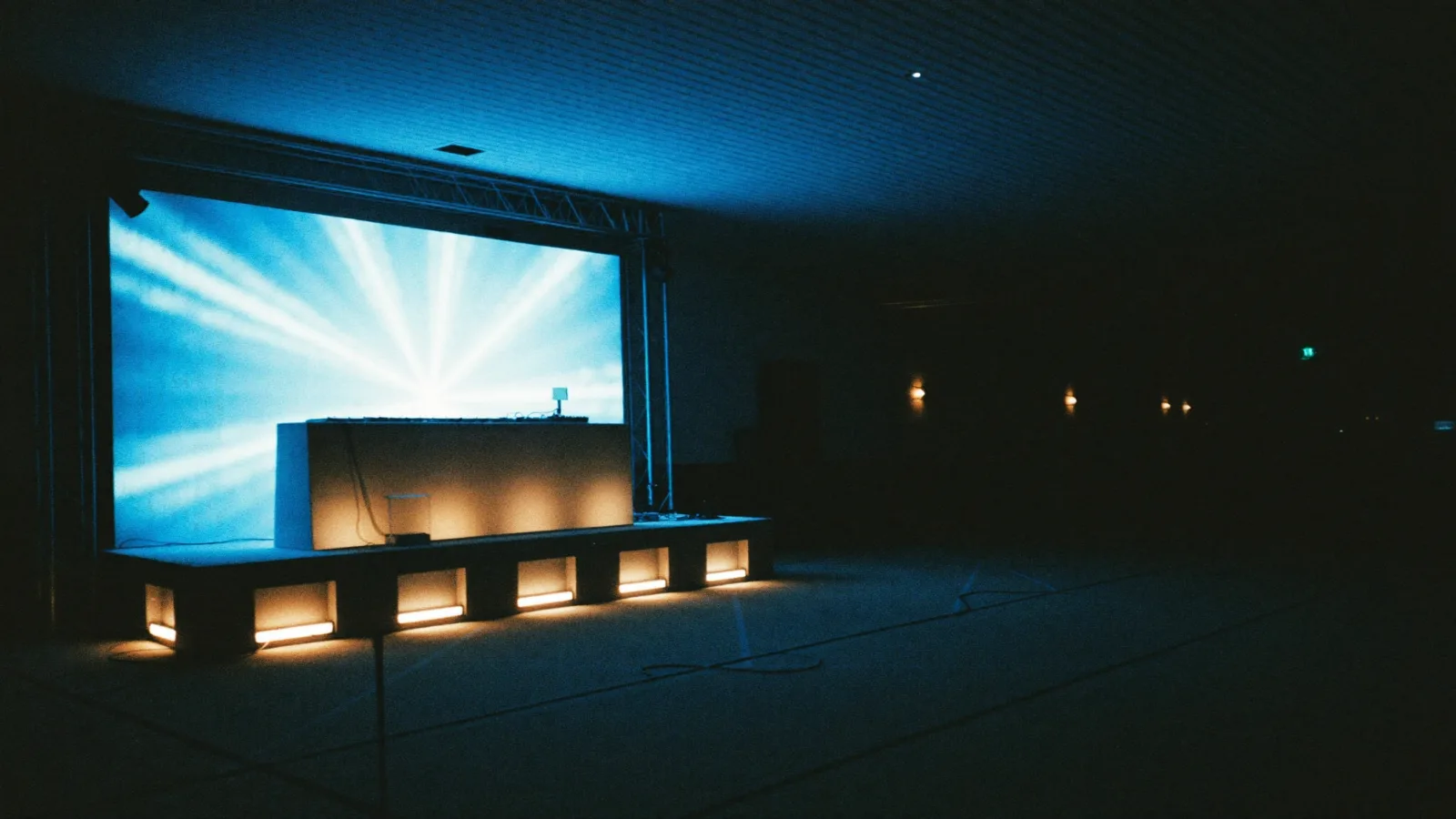
The DJ booth is part of the room design. The options on the service page are a scrim-wrapped facade, an LED-lit booth front and a custom-branded skirt. Pick one that fits the stage, the wall behind it and the brand.
The DJ usually doesn't bring standalone lighting. Room lighting is specified as its own package: uplighting, dance-floor movers, gobos and haze. In our experience a designed rig reads better than the light bar that comes with a standalone DJ, and it can be programmed to match the LED wall. Spec it with your event lighting, and use warm versus cool gala lighting to choose the palette.
Tell the floor team where the booth sits before artwork is final. A wrap with a logo that ends up under the booth wastes the print. If you're adding dance floor vinyl wraps, the same applies to the floor graphics and the DJ position; the artwork rules are in branded dance floor wraps for corporate events. Put the booth next to power, a network drop if you need one, and a clean audio path to the house PA.
What to put in the brief
A brief that fits on one page gets a quote you can compare. Send these:
- Event type and the run of show, with times for each moment
- Venue, room name and guest count
- MC level and who owns the script
- Mic count, and who speaks
- Music guidance: must-play, preferred and do-not-play lists
- Backup requirements
- Stream or recording: yes or no, and what music will be in it
- Booth look and position
- Power, load-in and load-out notes
- Who calls cues to the DJ, and on which comms channel
- A request for availability on your date
Pricing scales with duration, labor and scope. For DJ work that means event duration, MC scope, booth production, music customization, travel and backup redundancy, and a quote that doesn't separate them is hard to compare. We source the DJ and the crew for each metro in New York, New Jersey, Connecticut and Massachusetts, so the same brief works in each.
Get a quote
Send your brief and we'll return the scope as line items. Use the form to request an itemized quote. We return a fully itemized quote within 24 hours of your brief.
Frequently asked
Pricing scales with duration, labor and scope. For DJ work the drivers are event duration, MC scope, booth production, music customization, travel and backup redundancy. A short walk-in set with no mic work is a different job from a full program with an MC and a branded booth. We return a fully itemized quote within 24 hours of brief.
Yes. There are three levels: a full MC who hosts the program, name-reads only for awards and introductions, and presenter-mode intros for speakers. If the program is long or the host needs to work the room, we can staff a dedicated MC besides the DJ and coordinate cue tracking.
Usually not. Room lighting is a separate package designed with the rest of the production: uplighting, dance-floor movers, gobos and haze. It can be programmed to match the LED wall and looks better than a standalone light bar next to the booth.
The backup runs on a mirrored rig: playback mirrored on a second laptop, dual USB drives, and hot-swap channels on the mixer. Ask for those in the quote, and ask where the backup sits, so the swap takes a cable and not a search.
Yes. A program feed goes to the audio engineer for IMAG, streaming and recording. Decide whether the feed carries music only or music plus the MC mic, and ask about music rights for any segment that will be streamed or recorded.