DMX Versus Art-Net Versus sACN: Lighting Control Networks Explained
A clean lighting network keeps the focus on cues, not cable drama. Here’s how we choose between DMX, Art-Net, and sACN on real shows.
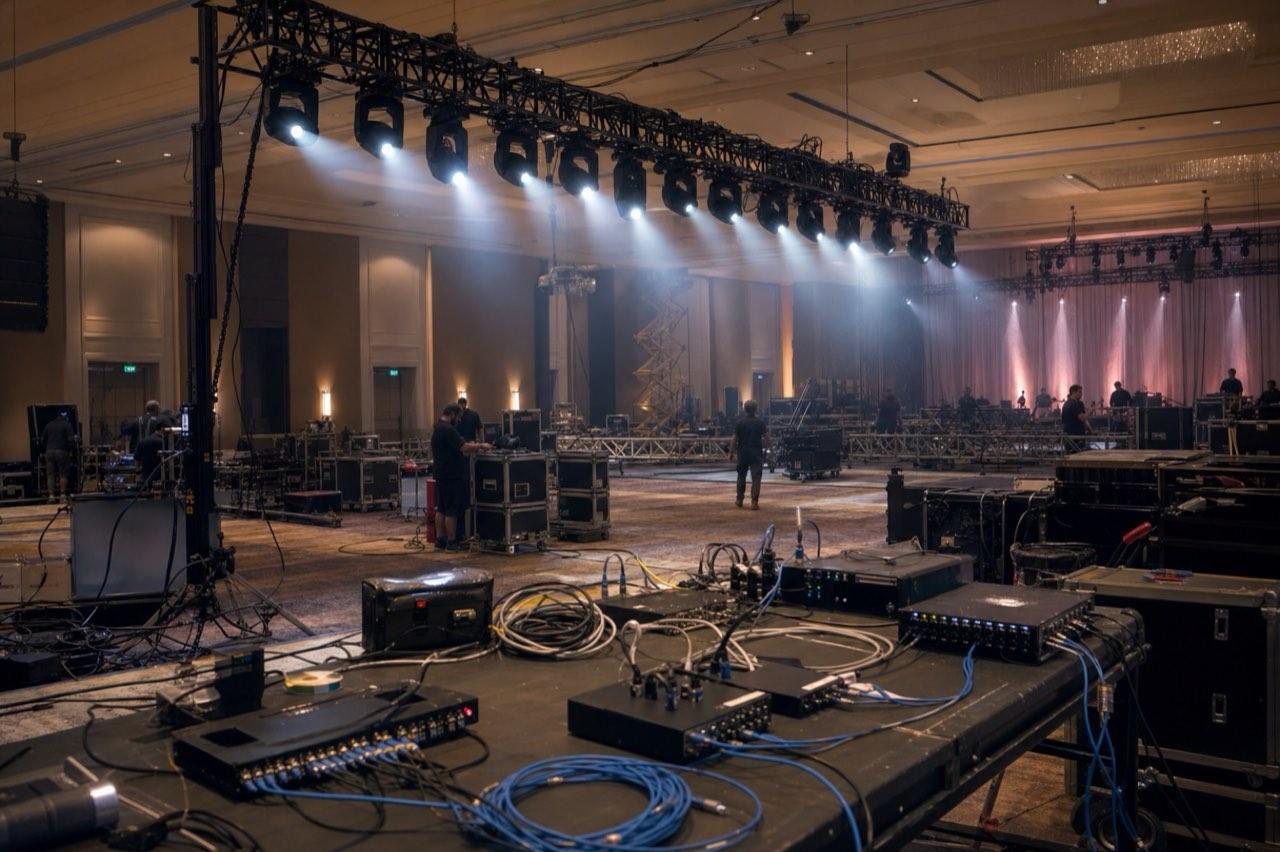
On show day, nobody compliments your protocol choice. They just notice whether the cues hit, whether fixtures respond the same way at 8:55 as they did at rehearsal, and whether your troubleshooting plan is faster than the client’s patience. DMX, Art-Net, and sACN can all get you there, but they behave differently once you scale past a handful of fixtures or you’re operating in a venue with noisy RF, shared networks, and tight changeovers.
Below is how we explain the three, how we decide what to run, and what we build in so a single bad cable or a chatty device doesn’t take the room down.
the one-sentence definitions we use on site
DMX512 is a one-way serial signal that sends levels for up to 512 channels on a single line (a “universe”), usually over 5-pin XLR or through a node converting it to Ethernet.
Art-Net is DMX data packaged over IP networks, most commonly using broadcast (or directed broadcast) so many devices can “hear” the same universe on a LAN.
sACN (ANSI E1.31) is also DMX over IP, but it’s designed around multicast, prioritization, and more predictable behavior on larger networks.
If you remember nothing else: DMX is simple and deterministic over copper, Art-Net is flexible but can get noisy fast, and sACN is built to scale if your network is set up correctly.
what problem you’re actually solving
Before we talk protocol, we ask a basic question: what are you trying to control, and how far apart is it?
A ballroom with a ground package (front truss, some side towers, a few practicals) is a different problem than a multi-room conference where lighting is spread across breakout rooms, pre-function, and a general session with LED wall, scenic, and media servers.
We look at:
- Fixture count and universes: how many universes are we truly using once you count movers, pixels, and hazers
- Geography: cable runs, FOH distance, where dimmer/beach boxes live, where nodes can be hidden
- Time pressure: do we have a full day to dress cable and label, or is it a turn-and-burn
- Change management: is content or cueing changing late, and do we need easy repatching
- Risk tolerance: are there any “must not fail” moments (walk-ons, award stings, sponsor hits)
Protocol is the last step. Topology and operational discipline matter more.
DMX: still the most predictable option when the run is reasonable
DMX gets dismissed as old, but it’s still the cleanest path when you can keep runs sane and you don’t need to span the building.
where DMX shines
- Small to mid rigs where you’re in 1–4 universes and most fixtures are within practical cable distance
- Point-to-point control where you want to eliminate “network surprise” entirely
- Environments with unknown IT constraints where you don’t want to touch the venue’s switches or VLANs
DMX is deterministic: the console sends levels; fixtures listen. There’s no IP addressing, no IGMP, and no one accidentally plugging in a laptop and blasting traffic.
DMX failure modes we plan for
DMX also has a specific set of ways it fails:
- Bad termination or reflections on long lines
- Physical damage: one crushed XLR can take out everything downstream
- Grounding issues in older venues
- Splitters used incorrectly (or not used when they should be)
When we run DMX, we treat it like a signal chain, not just “a cable.” We place opto-splitters where they reduce single points of failure, and we label universe and line numbers like we label audio snakes.
the DMX reality check: universes and distance
One DMX line is one universe. Once you’re beyond a couple universes and you have fixtures in multiple zones, the home-run strategy can turn into a cable mess. That’s where nodes and Ethernet protocols earn their keep.
Art-Net: flexible, common, and easy to get wrong
Art-Net is popular because it’s straightforward to get running, and a lot of devices support it without extra configuration. But it can create a lot of traffic, especially when you broadcast multiple universes.
where Art-Net shines
- Quick builds where you need fixtures online fast and the device ecosystem expects Art-Net
- Simple networks where everything is on a dedicated lighting LAN
- Hybrid setups where you’re using media servers or pixel processors that are already speaking Art-Net
On a controlled, dedicated switch, Art-Net can be perfectly stable.
where Art-Net bites producers
Art-Net’s “it just works” reputation disappears when:
- You’re running many universes and the network is pushing broadcast traffic everywhere
- Someone plugs in a device with the wrong IP range and you lose time chasing addressing
- You share a switch with other departments and Art-Net traffic becomes everyone’s problem
If the lighting network is not isolated, Art-Net can become that mystery issue that only happens when doors open.
a practical Art-Net rule: keep it on its own network
If we’re using Art-Net, we try hard to keep it on a dedicated lighting network with a dedicated switch stack. We do not like “just toss it on the video switch because it has ports.” It’s not about brand pride; it’s about having a known baseline.
sACN: designed for scale, but only if the network is built correctly
sACN is the protocol we reach for when we’re scaling up, distributing universes across zones, or we want better control over how data flows through a network.
what sACN gives you operationally
- Multicast support so only devices that subscribe to a universe receive it
- Priority so you can define what wins if multiple sources are present
- Better behavior at scale when configured properly
In a multi-room scenario, sACN can help prevent “universe everywhere” traffic. But multicast is not magic; it requires the right switch configuration.
multicast, IGMP, and the part people skip
If you use sACN multicast on a network with unmanaged switches or without IGMP snooping, you can still flood ports with traffic. The difference is you have a path to make it clean.
When we build a larger control network, we treat the switch configuration as part of the show package, not an afterthought. That includes:
- Managed switches where needed
- A clear addressing plan
- Universe maps that match physical zones
- A plan for who is allowed to plug into what
If the venue’s network team is involved, we coordinate early so we’re not negotiating VLANs during load-in.
universes, addressing, and why “just pick 2.x” isn’t a plan
Whether you’re using Art-Net or sACN, you need an IP plan that matches how the rig is physically deployed.
Here’s how we keep it practical:
- Define the zones first (FOH truss, stage truss, audience, scenic, exterior)
- Assign universes by zone, not by fixture type
- Keep addressing consistent across repeats (if the tour comes back, the map should still make sense)
A zone-based universe plan makes troubleshooting faster. If universe 12 is always “audience movers,” you don’t waste time guessing what’s on it.
choosing between DMX, Art-Net, and sACN on real shows
We don’t pick protocol because it’s trendy. We pick it because it reduces risk for the specific room.
when we stay on straight DMX
- 1–4 universes
- Short to moderate runs
- A rig where a clean splitter strategy eliminates single points of failure
- Tight time where fewer variables helps
when we use Art-Net
- Moderate universe count
- A dedicated lighting LAN is easy to keep isolated
- Gear ecosystem expects it (some processors and fixtures are happiest here)
when we prefer sACN
- Higher universe count
- Multiple zones, multiple nodes
- Multi-room distribution
- Any scenario where we want clean scaling and better traffic control
The goal is not to “use the best protocol.” The goal is to make the show behave the same way at rehearsal and at doors.
nodes, gateways, and where the conversion should happen
Most modern rigs end up with nodes somewhere, even if the console has physical DMX ports.
A good node strategy means:
- Place nodes close to fixtures to shorten DMX runs
- Home-run Ethernet back to your switch stack
- Label node outputs to match universe and zone names
When the conversion from IP to DMX happens near the fixtures, you reduce copper sprawl and isolate failures. A bad DMX line takes out a local area, not the whole room.
redundancy: what we actually do when the show can’t go dark
“Redundancy” can mean different things depending on budget and complexity. We’re honest about what helps and what is just extra gear.
Some realistic options:
- Dual network paths for critical nodes (where supported)
- Backup console session ready to take over
- Spare nodes and short DMX jumpers staged at FOH and backstage
- A clean power plan so your network doesn’t brown out when someone hits a distro hard
Notice what’s missing: we don’t rely on wishful thinking. We rely on tested failover and fast swaps.
troubleshooting workflow: diagnose in minutes, not in acts
When lighting control goes sideways, the biggest time-waster is guessing. We build a workflow that narrows the problem quickly.
Our baseline checks (and this is where a short list helps under pressure):
- Confirm the console is outputting the expected universes
- Confirm the switch stack is powered and links are up
- Confirm node IPs and universe subscriptions
- Swap a known-good cable on the affected leg
- If needed, bypass the network with a temporary DMX run for the critical fixtures
That last bullet is the producer move: if you can get the walk-on look back in 90 seconds with a temporary line, you buy time to fix the underlying issue without the room watching you.
working alongside video and venue IT without stepping on each other
In corporate rooms, lighting rarely gets a network to itself unless someone fights for it. We plan for that from the start.
If video is running a media network, and audio has control and Dante, and the venue has their own policies, the clean approach is segmentation. Even if everything shares physical switches, logical separation keeps traffic and risk contained.
We also define simple rules during load-in:
- Who is allowed to plug into the lighting switch
- Where guest ports are (if any)
- What happens if someone needs an emergency port at FOH
This avoids the classic moment where a well-meaning person “borrows a port” and accidentally introduces a loop.
the producer-facing takeaway
DMX, Art-Net, and sACN are all valid. The difference is how they behave when you scale, distribute, or share infrastructure.
If you’re producing a straightforward ballroom with a reasonable fixture count, DMX can be the most predictable tool you have. If you’re scaling up or distributing control around a venue, sACN (with the right switch plan) can keep things clean. Art-Net can be fast and common, but we treat it with respect because broadcast traffic adds up.
If you want EventProSource to spec the lighting control network (nodes, switch plan, universe map, and a troubleshooting path) for your event, we can build a plan that covers primary signal flow, a backup path, and the on-site reality of load-in. Email hello@eventprosource.com for a 24-hour quote and a practical recommendation based on your run of show.