Line Array vs Point-Source: Picking the Right PA for Your Room
Line array became the default because it solves a specific problem — long throw with consistent coverage. For shorter rooms, it is often the wrong tool. Here is the difference.
Why line array became the default
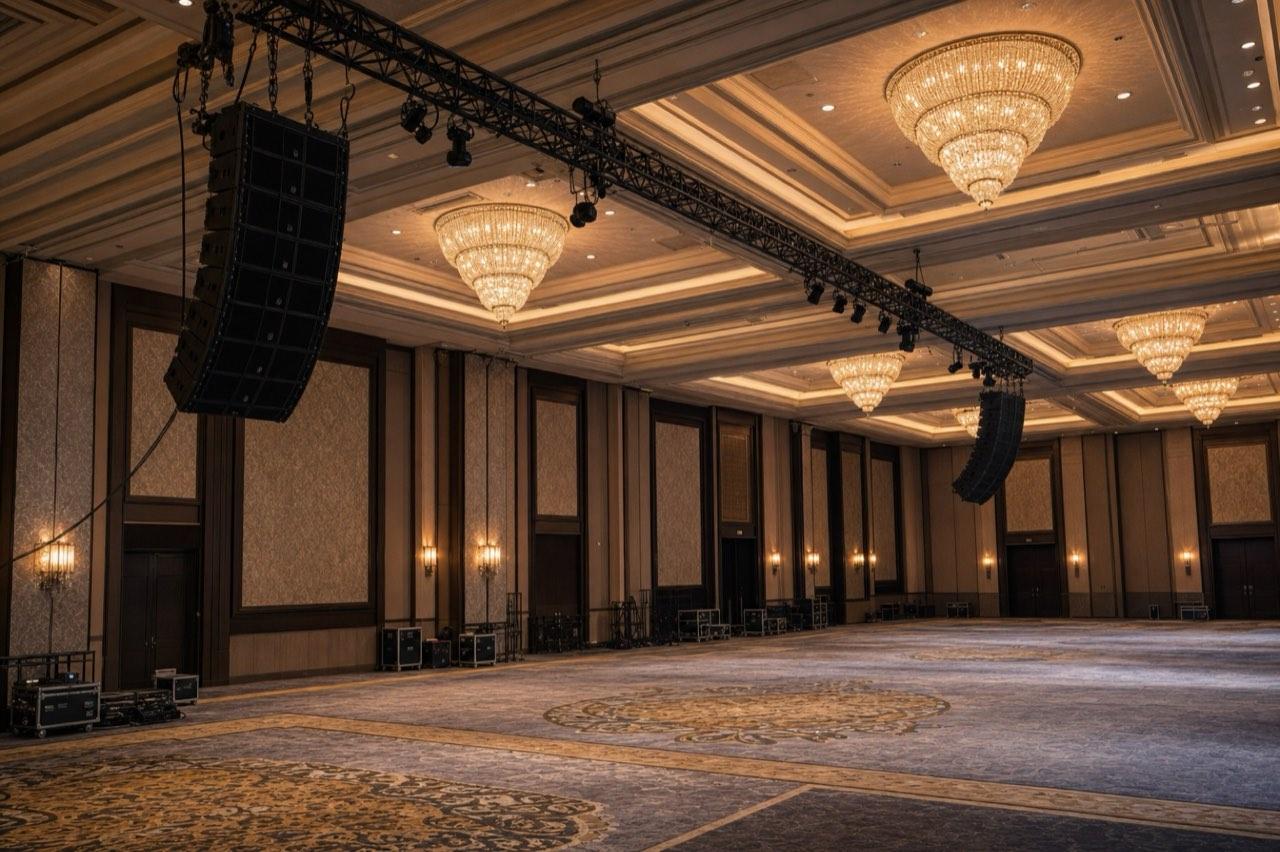
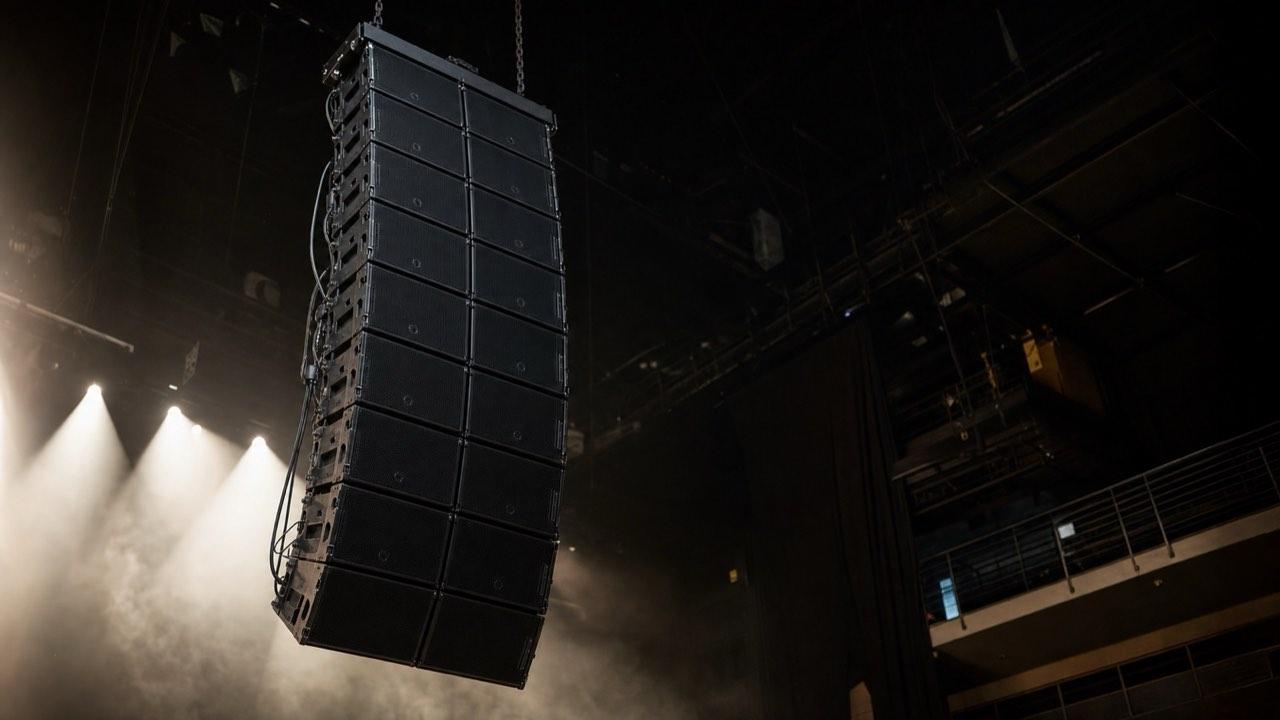
Line array PA systems became dominant in the last 25 years because they solve a specific problem: delivering consistent sound pressure across a long, deep audience area. Stacked vertical elements with controlled vertical dispersion let the engineer aim the high-frequency energy at distant seats while keeping the front rows from being blasted.
For outdoor festival fields, large arenas, and any room with significant depth, that capability is genuinely valuable. For most corporate ballrooms and event spaces under 80 feet deep, line array is overengineered for the problem.
What point-source PA does well
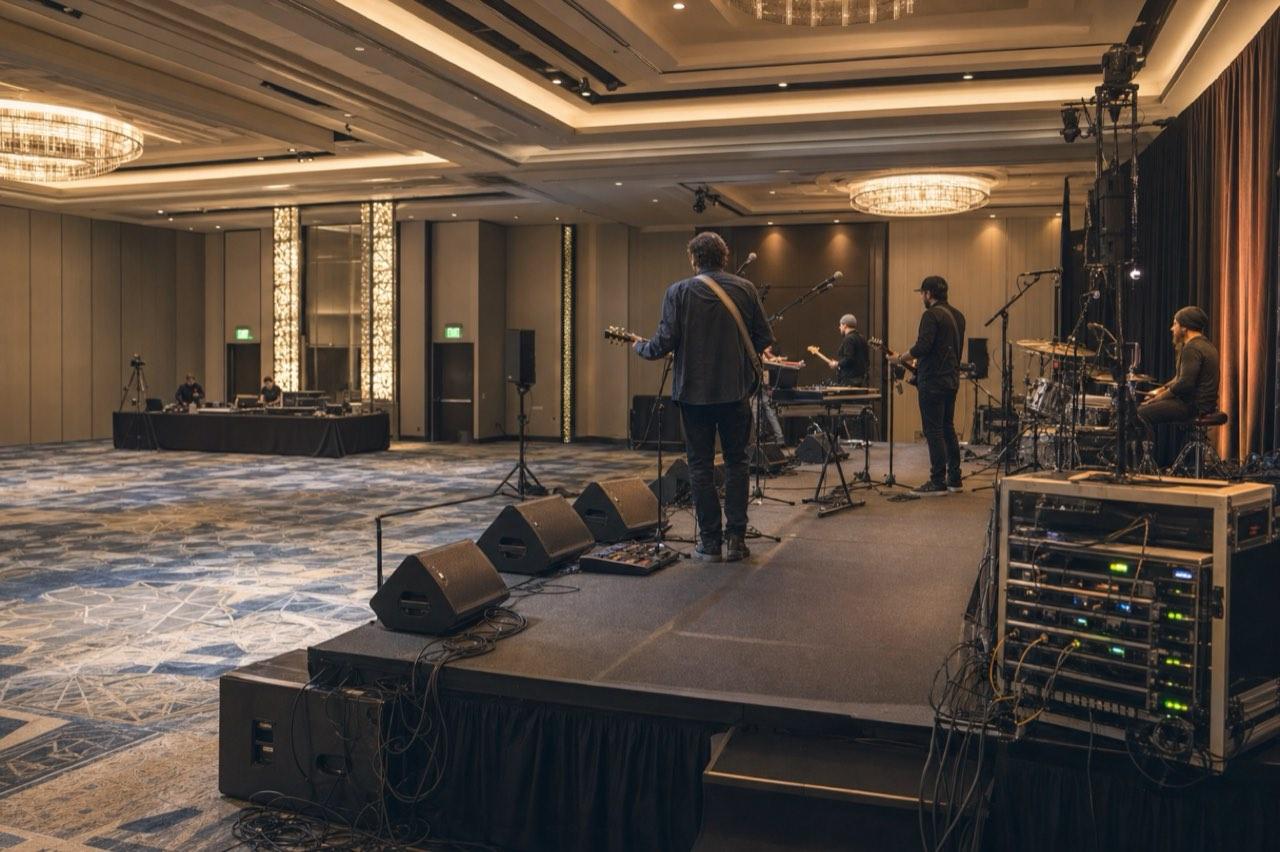
A point-source PA is a single loudspeaker (or a small cluster) that radiates sound in a wider arc. Examples include the Meyer UPJ, the d&b E15, and the JBL VRX series in non-array configurations.
- Wider horizontal coverage in a small footprint — better for L-R stereo without flown elements
- Faster setup and strike — typically half the rigging time of a comparable line array
- Lower cost at both the rental and crew level
- Better off-axis coverage for rooms where seating wraps around the stage
For corporate ballrooms under 60 feet deep, point-source PA is often the right answer.
When line array earns its cost
Line array delivers value when any of these conditions are present:
- Long throws. The room is over 80 feet deep, or the audience extends into a balcony or rear platform.
- High SPL. The show needs to hit 100+ dB at the back row (concerts, dance music, full-band live performance).
- Tight vertical control. The room has reflective surfaces overhead and the engineer needs to keep energy off them.
- Multiple coverage zones. The audience is on a slope, or there is a mezzanine, requiring two or three separately aimed arrays.
- Outdoor with weather contingency. Most premium line arrays have weather-resistant variants. Most point-source boxes do not.
If none of those conditions are true, a properly sized point-source or compact array delivers the same coverage at lower cost and faster setup.
The math on a typical NYC corporate event
A 400-person corporate event in a midtown hotel ballroom, room depth 55 feet, ceilings 18 feet, mixed program of speeches, walk-up music, and a Q&A.
A line array spec for this room might call for 6 to 8 elements per side, flown on motorized rigging, with a sub array on the floor. Total system cost (rental and labor) typically lands around $14,000 to $19,000.
A point-source spec for the same room uses 2 loudspeakers per side on tripod stands or ground-stacked, with a single sub per side. Total cost typically lands around $5,500 to $8,500.
The audience experience for this specific show, in this specific room, is functionally identical. The difference shows up only when the room gets deeper or louder.
What we ask before specifying PA
Four questions answer it most of the time:
- What are the room dimensions, especially depth and ceiling height?
- What is the program content — speech only, walk-up music, live band, dance?
- What is the expected peak SPL — quiet conversation accompaniment, conference-level intelligibility, full concert?
- Is there a balcony, mezzanine, or upper level that needs separate coverage?
With those answers we can spec the right system in the first quote without overbuilding. If the right answer is a line array, the proposal will say so and explain why. If point-source covers the room, we will not flow line array into the budget just to look impressive on the spec sheet.
Quotes go out within 24 hours of a complete brief.