The Quote Revision Process: How to Iterate Without Losing the Show
A practical revision cadence that keeps scope changes from turning into show-day chaos.
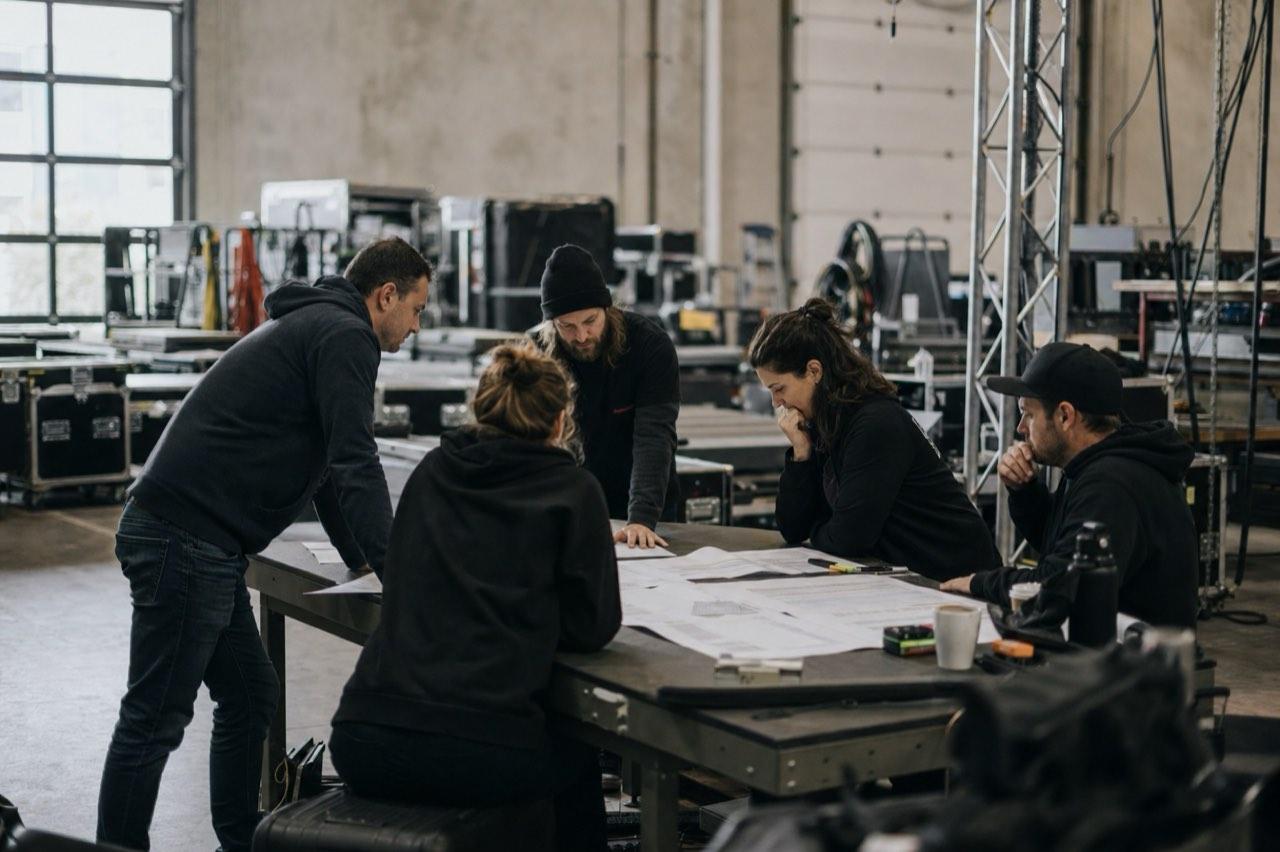
Lead time disappears fast when a stakeholder wants “one more tweak.” The trick isn’t to stop changes — it’s to control how they land so you don’t blow your load-in, your crew, or your signal flow. If your quote revisions are chaotic, the show day usually is too.
why quotes change (and why that’s not a problem)
Most quote revisions aren’t about indecision. They’re about new information showing up late:
- The venue sends rigging rules after you’ve already specced truss.
- A speaker turns keynote into a panel, which turns two mics into six.
- Brand decides the LED wall is “the moment,” which changes video, power, and scenic.
- A sponsor appears and suddenly there’s an extra activation footprint.
We plan for that reality. The goal isn’t a quote that never changes; it’s a revision process that keeps the event stable while details evolve.
set the revision cadence before the first PDF goes out
If you don’t set a cadence, revisions happen whenever someone has a thought — and you’ll spend your week re-exporting documents and re-checking inventory.
On our side, we like to set expectations in the very first exchange:
- When we’ll deliver the initial quote
- How often we’ll roll revisions (daily vs. every 48 hours)
- What counts as “minor edits” vs. “scope change”
- When we need a freeze to protect load-in and shop prep
A simple cadence does two things: it protects your planning time and it gives stakeholders a predictable rhythm to react in. You can still move fast, but it’s organized fast.
treat the quote like a scope document, not a shopping cart
A clean quote reads like a production plan. A messy quote reads like a pile of gear.
When we build quotes, we structure them to map to how you actually run the show:
- Audio (inputs, outputs, RF plan assumptions)
- Video (sources, destinations, switching, distribution)
- Lighting (control approach, fixture counts, power needs)
- Staging/rigging (points, trims, load assumptions)
- Power (service assumptions, distro layout, feeder lengths)
- Labor (call times, departments, meal penalties rules if applicable)
- Logistics (truck access, dock time, storage)
If a revision request comes in, we can point to the affected section and quantify what moves with it. That keeps “can we just…” from turning into a hidden domino chain.
start every revision with the run of show
Run of show is the translator between creative intent and technical reality. Before we touch a line item, we ask:
- What is the moment you’re trying to change?
- What time does it happen?
- Who is on stage?
- What’s the cue sequence?
- What has to be visible, audible, recorded, or streamed?
You’d be surprised how often a revision is solved by changing the cueing, not the equipment. For example: adding a presenter confidence timer might reduce the need for an extra stage manager position. Or adjusting a walk-on path might eliminate a camera obstruction.
separate “design revisions” from “operational revisions”
Not all changes are equal. We separate revision requests into two buckets:
Design revisions change what the audience experiences.
- Bigger LED surface
- Different key light look
- More immersive audio coverage
Operational revisions change how the show runs.
- Earlier doors
- Shorter turn time between sessions
- Added language interpretation
Why split them? Because operational revisions tend to hit labor, schedule, and backstage complexity harder than people expect. A “simple” 30-minute earlier doors can move crew call, catering timing, rehearsal windows, and when FOH has to be locked.
the hidden math: labor and shop prep are the first places revisions bite
Gear is only part of the quote. The quote is also time.
If a change lands after we’ve started pulling, labeling, pre-building racks, or prepping cable looms, the work doesn’t just rewind for free. Late revisions often create:
- A second round of shop prep
- More QA time (because the system changed)
- More truck pack complexity
- More load-in minutes (because the plan is different)
This is where producers get burned: the equipment delta looks small, but the labor delta is real. We call that out early so you can decide whether the change is worth the operational cost.
build a “change log” that producers can actually use
Email threads are not a revision system. We prefer a simple change log that tracks:
- Date/time of request
- What changed (plain language)
- Affected departments (audio/video/lighting/staging/power)
- Quote sections updated
- Open questions and owner
It doesn’t need to be fancy. The point is to keep everyone aligned when three people are asking for revisions in parallel.
revision checkpoints: the three freezes that protect the show
We use three practical freezes. They’re not arbitrary; they line up with real-world prep:
- Creative freeze: the “what” is stable (visual goals, content plan, stage layout).
- Engineering freeze: the “how” is stable (signal flow, power plan, RF plan, rigging plan).
- Warehouse freeze: the pull list is locked (cases tagged, trucks planned, prep underway).
You can still make changes after any freeze, but we treat them differently and we’ll tell you exactly what risk they introduce. The later the change, the more it shifts from “revision” to “rebuild.”
how we handle common revision scenarios
Here are a few revision requests we see all the time, and what we check before we approve them.
“Can we add one more mic?”
We check:
- RF coordination assumptions (especially in NYC)
- Mixer input count and stagebox capacity
- Backstage mic storage and labeling
- IFB/comms impact if it’s a host or moderator
Sometimes it’s truly one more mic. Sometimes it’s a new RF plan.
“We want the LED wall bigger.”
We check:
- Pixel count and content deliverable changes
- Rigging points, trim, and weight
- Power draw and distro capacity
- Sightlines (bigger isn’t always better)
A bigger wall often changes the content workflow more than the physical build.
“We need IMAG now.”
We check:
- Camera count, lensing, and positions
- Switching and shading needs
- Cable paths and floor safety
- Delay and audio timing considerations
IMAG is a show within the show. Treat it that way.
“Can we move the stage?”
We check:
- Sightlines and room geometry
- FOH position and cable runs
- Power tie-in location
- Rigging grid constraints
Stage moves can be painless early and painful late.
keep the quote readable: versioning and naming conventions
If every revision is “final_v7_reallyfinal.pdf,” you’re going to load the wrong document at the worst time.
We use a simple naming pattern:
- ProjectName_Vendor_Quote_R##_<YYYY-MM-DD>
And inside the document, we include a short revision note near the top:
- R03: Added (2) wireless handhelds for panel, updated RF assumptions
That way, if you’re on-site and someone asks “what did we approve,” you can answer in 10 seconds.
don’t let revisions bypass the approval chain
A fast revision process still needs a gate. We recommend defining:
- Who can request changes
- Who approves changes
- Who gets notified automatically
If approvals are loose, you’ll get scope drift. Scope drift is usually what breaks budgets and schedules — not the original spec.
a practical way to price revisions without drama
We don’t like surprise bills and producers don’t either. The clean approach is:
- Keep the base scope stable and clearly described
- Itemize additions and removals visibly
- Call out when a change affects labor or logistics
- Be honest about what’s already in motion (prep, trucking, crew calls)
When everyone can see what changed and why, revisions stop feeling like negotiation and start feeling like planning.
the last-mile check: revise the quote, then revise the plan
A quote revision isn’t complete until the operational docs match it. After we update the quote, we also update:
- Pull list and prep notes
- Patch sheets and input lists
- Power plan and feeder lengths
- Rigging plot assumptions
- Crew call and department heads
This is where teams win time. The show doesn’t run on PDFs; it runs on the plan behind them.
closing: a quote process that protects the day-of
If you want to revise fast without losing control, make the revision process part of the production, not an afterthought. We build quotes so they’re easy to iterate, easy to audit, and hard to misunderstand.
If you want EventProSource to handle your quote revisions without slowing the show down, we can build a plan that covers the base scope, the backup options, and the operational reality behind each change. Email hello@eventprosource.com for a 24-hour quote and a practical recommendation based on your run of show.