Event Power Distribution: Generators, Cam-Lok, and Distro
A field guide to temporary event power: how generators, feeders, distros, and tie-ins fit together so your show stays online.
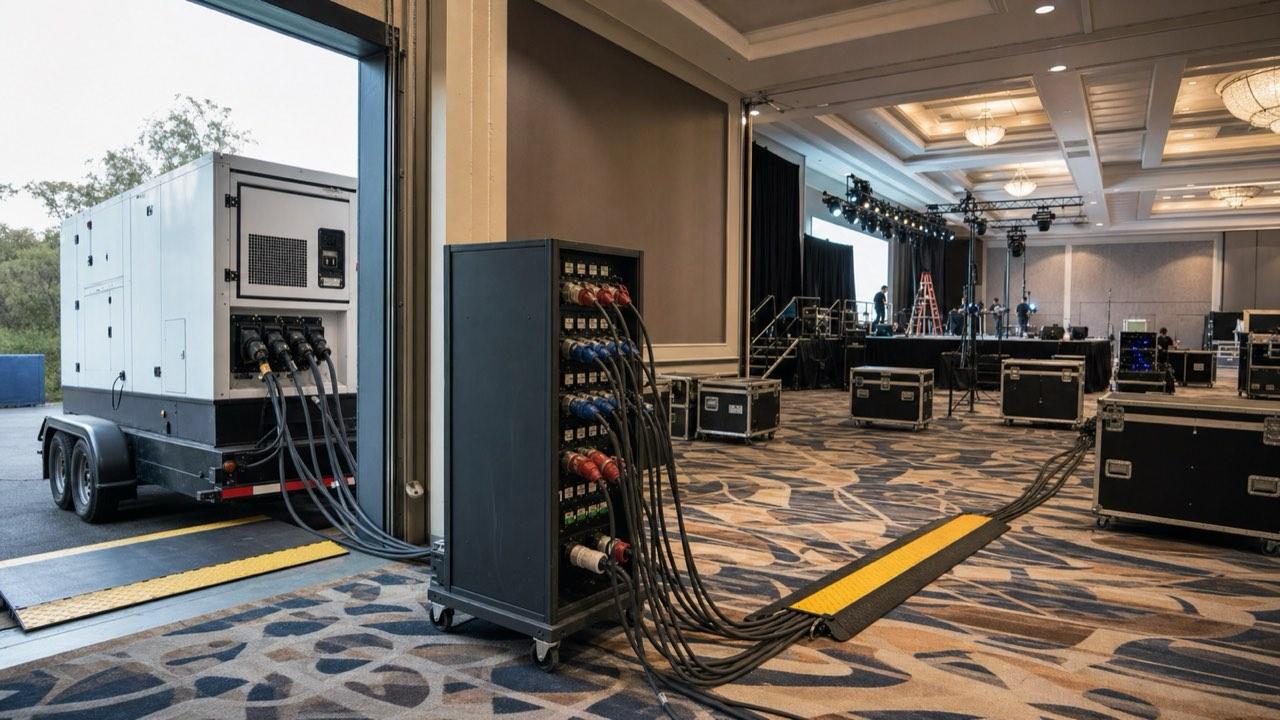
The show can look perfect on paper and still die the moment someone turns on the coffee urns. Temporary power is one of those departments where small assumptions turn into big problems fast: nuisance trips, buzzing audio, dim LED walls, hot connectors, or a generator that simply will not carry the load.
Start with the question that matters: what are you powering
Before you talk gear, you need a load list that matches reality. Not the optimistic list from a deck, and not the venue's marketing sheet. A working load list has three things:
- What it is (LED wall processors, moving lights, audio racks, catering warmers, laptops, uplights)
- How it plugs in (Edison, PowerCON, L6-20, L21-30, 14-50, Cam-Lok, bare tails, hard tie-in)
- How it behaves (steady, inrush, peaks, duty cycle)
If you are not sure about a device, get its nameplate rating, then confirm what it actually draws when it is working. LED walls, video servers, and moving lights are common offenders for being spec'd one way and used another.
The basic chain: generator to feeders to distro to breakouts
Most corporate and experiential shows fall into a simple chain:
- Source: venue house power, a generator, or both
- Feeder: the heavy cable run from the source (often Cam-Lok or similar)
- Distro: the rack that breaks that feeder into protected branch circuits
- Breakouts: the last leg to devices (Edison quads, Socapex, PowerCON, L6-20, etc.)
If any one of those links is undersized, unprotected, or poorly managed, you feel it everywhere. The goal is boring power: stable voltage, clean grounding, and circuits that trip only when something is genuinely wrong.
Generators: sizing, placement, and the stuff that gets missed
A generator is not just a number on a quote. For event work, you care about three practical details.
1) Real capacity, not brochure capacity The generator needs headroom for inrush (motors, HVAC, some power supplies) and for the reality that shows grow. A plan that uses every last amp on day one has no margin for a last-minute add.
2) Placement and cable path You need a path from the generator to the ballroom, tent, or stage that does not create a trip hazard or put feeders where forklifts and lifts will cut them. Assume you will need cable ramps, plates, or overhead management at door thresholds and traffic lanes.
3) Fueling and sound Fueling windows matter if you have tight programming or you are in a hotel environment. Generator noise also matters, especially for outdoor VIP zones and quiet content. Placement, orientation, and barriers can make the difference between a clean program and a complaint.
Cam-Lok feeders: what they are, how they get people in trouble
When someone says "Cam-Lok," they usually mean single-conductor feeder cable with color-coded connectors that carry the main feed: three hots, neutral, and ground.
Where problems happen:
- Connector order and discipline: connect ground first, disconnect ground last. Do not rush this.
- Strain and bend radius: feeders hate tight turns and door pinch points.
- Heat: hot connectors mean high load, loose connection, damaged connector, or all three.
Feeder cable is not an area for improvising. If the run is long, the load is heavy, or the environment is wet or hot, you plan for it.
Distros: your breaker panel for the show floor
A distro is the traffic cop between your main feed and everything downstream. A good distro plan does two things: it keeps your circuits protected and it keeps your departments separated.
Separate departments when you can Audio, video, lighting, and catering do not always play nice together. Even when it is all technically fine, separating them makes troubleshooting faster. If catering trips something, you do not want it to be your video wall.
Labeling is not optional Every output should be labeled with voltage, connector type, breaker size, and what it is feeding. "Stage left" is not a circuit description. "Stage left audio racks" is.
House power tie-ins: when you are in a venue, not a tent
In many hotels and venues, you can tie into house power or use dedicated company switches. The real work is coordination.
- Confirm what the venue provides and what is permitted.
- Confirm who is authorized to tie in.
- Confirm the available amperage and phases.
- Confirm where the tie-in is located and how your feeders get to the room.
If you are bringing a generator for a ballroom show, do not assume you can just run feeders through any door. Loading docks, fire egress rules, and door thresholds will shape the plan.
Load balancing and phases: why your "300A" does not behave like one big bucket
Three-phase power is common in event distribution. The concept is simple: you want to balance loads across phases so one leg is not doing all the work.
A practical way to think about it:
- Big steady loads get planned first (LED wall power, dimmer racks, major audio racks)
- Then you distribute smaller loads to keep the legs even
- Then you keep a little room for changes
When a show runs unbalanced, you see it as nuisance trips, heat, voltage sag, and weird behavior under peak moments.
Grounding and GFCI: safety and the real-world tradeoffs
Grounding is not a place for folklore. You follow electrical standards, manufacturer guidance, and venue rules.
GFCI protection is often required for outdoor and wet locations, and it is good practice in many indoor cases. The tradeoff is that some gear and some environments can create nuisance trips.
The fix is not to defeat protection. The fix is to plan circuits correctly, use proper distribution, and isolate problematic loads the right way.
Cable management: how you keep power from becoming the hazard
Power distribution is also a physical logistics problem. The best electrical plan can still fail if cables are exposed, kinked, or run through traffic.
One short checklist that saves shows:
- Use cable ramps or floor plates at every crossing
- Keep feeder and signal paths separated where practical
- Leave service loops at distros so connectors are not under tension
- Gaff and label branch runs so strike is fast and safe
- Keep distros accessible for resets and monitoring
Power and audio/video: keeping noise out of the system
If you have ever chased a hum for an hour, you already know that power and grounding can show up in audio and video.
A few field rules:
- Keep audio on dedicated circuits where possible
- Avoid sharing circuits with motors, compressors, and kitchen equipment
- Keep dimmers and large switching loads away from sensitive audio paths
- Use proper power conditioning where appropriate, but do not treat it as a magic fix
When the power plan is clean, the rest of the show is easier.
Planning for load-in and show day: the sequence matters
Power is one of the first things you want online, but it is also one of the easiest things to rush. Build a sequence that keeps you safe and keeps the room moving.
- Source confirmed and locked in
- Main feeders run and protected
- Distros landed, labeled, and tested
- Branch circuits run and dressed
- Departments power up one at a time
When departments power up in a controlled sequence, you find issues before they cascade.
When to bring in pros and what to ask for
If you are tying into house power, running big feeders, or powering large outdoor builds, you want experienced hands. The questions that matter are practical:
- What is the source, and what is the path into the room
- How are you protecting and labeling circuits
- What is the plan for balancing phases
- Who is monitoring power during show
- What is the plan for weather, fueling, and after-hours access
If those answers are clear, the rest of the build goes smoother.
A few internal resources to cross-check your plan
If you are planning a bigger build, it helps to sanity-check the rest of the stack. These are good companions to your power plan:
- Corporate A/V Checklist for NYC Venues
- Outdoor Staging Weather Planning
- Choosing LED Wall Pixel Pitch
And if you need gear and crew support, these pages explain how we scope real installs:
Bottom line
Temporary power is not glamorous, but it is the backbone of the show. Build a real load list, size the source with margin, run feeders with discipline, and keep your distro plan simple and labeled. The payoff is a show that powers up clean and stays stable when the room fills and everything turns on at once.
Need help scoping generators, distribution, and a safe cable plan for your next event. Email hello@eventprosource.com and we can turn around a 24-hour quote with a practical power approach that matches your venue and schedule.