Brand Activation Production Services: Scope and Brief
A buyer's guide to scoping brand activation production services: what the work covers, who owns what, how to read an itemized quote and what to put in the brief.
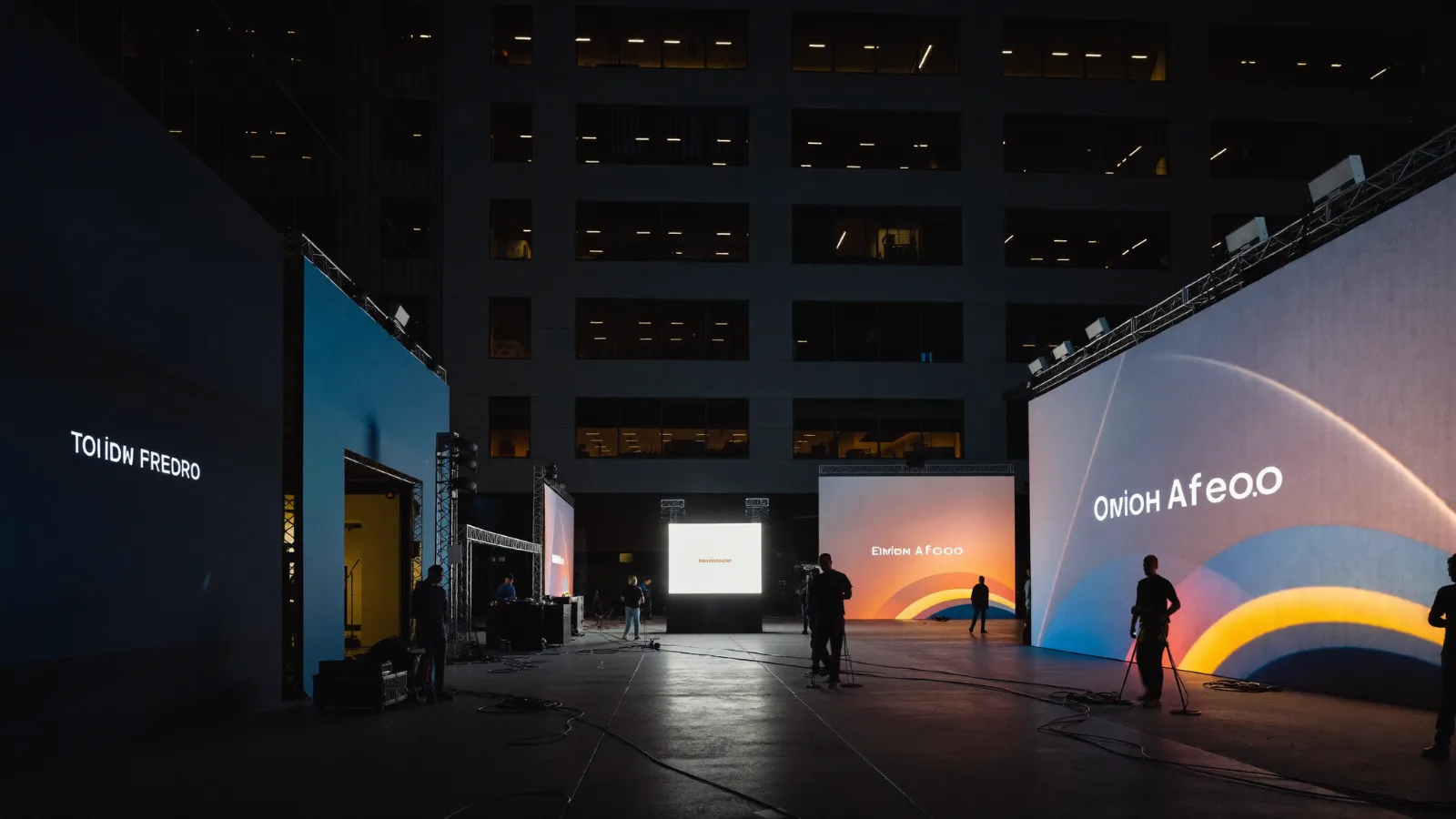
A brand has approved the concept. The venue or street footprint is set, the date is on the calendar, and the next question lands on a producer's desk: who builds it, powers it, permits it, staffs it and strikes it? Three vendors send three quotes with different line items and no shared scope, and the cheapest-looking one is usually the one that left a layer out.
Brand activation production services are the answer to that question, and this guide is for the person who has to buy them in New York, New Jersey, Connecticut or Massachusetts. It covers what the work includes, where production stops and creative starts, how to read an itemized quote, and what to put in the brief so the first quote is usable. If you want the service itself, see our brand activation production page. If you are scoping one, read on.
What do brand activation production services cover?
Brand activation production services are the operational work behind an activation: site survey, build and fabrication, power, A/V integration, permits and venue paperwork, staffing, on-site management and strike, with the creative concept staying with the brand or its agency.
Treat the table below as a checklist. Not every activation needs every row, but every row should be answered in the quote, even if the answer is "not applicable."
| Layer | What it covers | What the quote should state |
|---|---|---|
| Site survey and design for build | Footprint, access, dock and elevator route, drawings built from mood boards, CAD files or a verbal brief | Who surveys, and what drawings come back |
| Build and fabrication | Custom scenic, structural builds and signage, sourced through vetted fabricators | Who fabricates, materials, finish, and how it breaks down for transport |
| Power and distribution | Venue tie-in or generator, distribution, cable protection | Load assumed, who supplies, who connects |
| A/V and interactive tech | LED, sound, lighting and interactive elements integrated from the design stage | Equipment by surface, operator, content specs |
| Permits and venue paperwork | City, state and venue applications, including street use, amplified sound and temporary structure permits | Who files, who holds each permit, what falls to the brand |
| Staffing | Brand ambassadors, event staff and security from matched staffing partners | Headcount by role and shift |
| Logistics | Trucking, load-in, storage on site | Dock times, vehicles, labor calls |
| On-site management and strike | One project manager as the single point of contact; strike to the venue's specification and floor restoration | Hours, and who signs off with the venue |
Notice that strike and restoration appear as something the quote states, not something assumed. In our experience a strike that nobody scoped turns into a change order on the last night.
Where does production end and creative begin?
Most activations involve two parties with different jobs. The brand or its experiential agency owns the idea. The production partner owns whether that idea can be built, powered, permitted and struck in the actual space. We work alongside experiential agencies as the production layer; we do not replace them.
The table below is a working split. Confirm it in the quote, because every project moves a line or two.
| Decision | Brand or agency | Production partner | Settle together |
|---|---|---|---|
| Concept, story, messaging | Owns | Reads it | |
| Design intent and renders | Owns | Flags what will not build or load in | Approved drawings |
| Materials and fabrication method | Approves the look | Specifies how it is built, moved and struck | Finish samples |
| Content for screens and interactives | Delivers | Gives pixel specs, tests playback | Delivery date |
| Permits and insurance paperwork | Provides brand details | Files, tracks and holds as agreed | Who holds each permit |
| Staff briefing and brand standards | Writes the standards | Staffs to them and manages on site | Dress, scripts, escalation |
A brand coming direct, without an agency, has one extra job: someone has to hold the creative decisions. In that case the production partner coordinates the full chain from drawings to strike, and the brand names one approver who can answer questions quickly during the build.
Build and fabrication: sourced for the room
Custom builds are the largest cost variable on our brand activation page, and the build is where the gap between a render and a real object shows up. We source vetted local fabricators, crews and gear in each metro and match them to the room, not to whatever sits in a warehouse.
Whoever builds it, ask the same questions of every fabrication line in a quote:
- Modular or one-piece? A one-piece build that cannot pass a freight elevator is a build that does not get into the building.
- Load rating. If people will touch it, lean on it or sit on it, the quote should say what it is rated for.
- Finish. Paint and laminate that look right in a render can scuff under the first crowd. Ask what survives a crowd.
- Repair kit. A touch-up kit and someone authorized to use it should be on site for the full run.
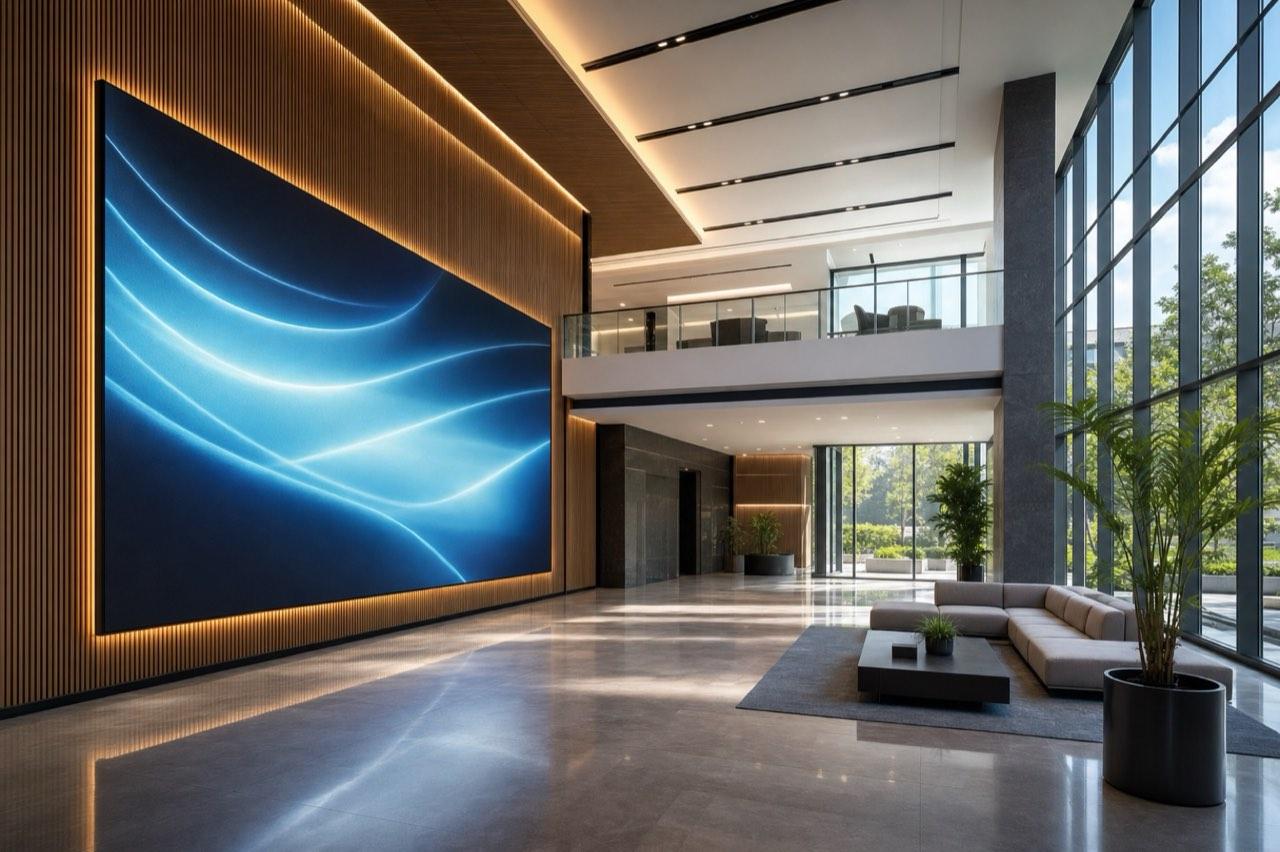
One piece of design-for-install advice from the production side: measure the freight elevator and the doorways before the render is approved, not after the scenic is cut. A screen wall that is two inches too tall for the car is a redesign, not a delivery problem. For a sense of how a built element behaves in a lobby, see our notes on corporate atrium installations.
Power, A/V and tech inside the build
Screens, speakers and fixtures belong in the design from the first drawing, not at load-in. Decide where each one sits, where the cable runs, how much power each zone draws and what content spec each surface needs. Doing it in that order means the scenic has a place to hide the hardware instead of a crew taping cable to a finished wall.
Most activations pull from the same few categories:
- Video. LED wall rental for large or curved surfaces, TV and monitor rental for smaller screens, product displays and portrait signage. If the surface is architectural, projection may fit better; see projection mapping basics.
- Light. Lighting rental for key light on the product, color wash on scenic and haze or gobos where the venue allows them.
- Power. Venue tie-in or generator, then distribution and cable protection. Our guide to how event power is distributed explains the pieces a quote should name.
- Add-on modules. Sampling stations, photo capture and similar elements. Our photo booth rental page covers the service, and the post on photo booth formats and branding covers how to choose.
Settle content early. Every screen needs a file at the right resolution and aspect ratio, and the playback has to be tested on the actual hardware before the doors open.
Permits, insurance and venue rules
Permits differ by city and by venue, and the right answer for a plaza in Manhattan is not the right answer for a mall in New Jersey or a downtown block in Hartford or Boston. We manage city, state and venue permit applications, including street use, amplified sound and temporary structure permits. The brand supplies its details. Anything beyond that gets settled in the quote.
Three questions belong in every scope conversation:
- Who files each application?
- Who holds each permit once it is issued?
- Who covers any deposit the venue or city requires?
Confirm current requirements with the venue and the city before you commit to a schedule. For the street-level picture in the largest market, see NYC brand activation permits.
Staffing, on-site management and strike
Brand ambassadors, event staff and security scale with duration and attendance. Staffing is matched from vetted staffing partners rather than a single in-house list, which means the headcount, shift length and role descriptions should appear by line in the quote. A line that says only "staffing" tells you nothing about coverage at the hour when the line is longest.
One project manager acts as your single point of contact on site. That person owns the run of show, the venue relationship and the call on when something is safe to open to the public. Ask who it will be and how to reach them on build day.
Strike is a line item with its own scope: hours, labor, venue sign-off and floor restoration. Spell out the venue's strike requirements in the brief. For how build schedules tend to unfold, see our post on realistic build timelines.
How do you read an itemized production quote?
For an activation with screens, one sentence from our quoting process applies to every driver on the page. Pricing scales with pixel pitch, square footage, install complexity, labor, duration, and content needs. We return a fully itemized quote within 24 hours of brief.
Beyond the screens, the drivers specific to activations are fabrication complexity, permit requirements, staffing headcount, A/V scope, geographic scope and duration. We will not give a number here, because any figure without your footprint and dates would be a guess.
An itemized quote should separate these lines. If one is missing, ask.
| Quote line | If it is missing, ask |
|---|---|
| Fabrication and scenic | Who builds it, and in what materials? |
| Structure and rigging | What carries the load, and who signs it off? |
| Power and distribution | What load is assumed, and who connects? |
| A/V by surface | Which equipment runs where, and who operates it? |
| Content and playback | Who tests it, and on what hardware? |
| Permits and venue fees | Who files, who holds, who pays any deposit? |
| Staffing by role and shift | How many people, when, and doing what? |
| Trucking and logistics | Which vehicles, which dock, which labor call? |
| Project management | Who is on site, and for how many hours? |
| Strike and restoration | Who signs off with the venue? |
| Contingency | What does it cover, and what does it not? |
When you compare two quotes, match the assumptions first: footprint, days on site, who files permits, who supplies content. Only then compare totals. Two quotes with different assumptions are two different projects, and the lower total often reflects the one with a layer missing. If A/V packages come up in the comparison, our A/V equipment rental page shows how those lines are grouped.
What should the brief contain?
This is the part that turns a guess into a usable first quote. Send as much of the following as you have, and say plainly what you do not have yet:
- Objective and audience
- Dates and hours, including build days and strike days
- Venue or street location, and the access route from dock to footprint
- Footprint, with any renders, CAD files or mood boards
- Expected attendance and how many people move through per hour
- Screens, sound, lighting and interactive elements
- Content delivery date
- Branded elements and the people who approve them
- Staffing roles you expect
- Who files permits
- Load-in and strike constraints from the venue
- A budget ceiling, stated to us only, so scope can be fitted to it
An incomplete brief still gets an answer. The quote will carry the assumptions we had to make, and each assumption becomes a question you can close.
When the brief is ready, request an itemized quote. We return a fully itemized quote within 24 hours of brief, with local crews and gear sourced for the room in your metro, whether that is in New York, New Jersey, Connecticut or Massachusetts.
Frequently asked
They cover the operational work behind an activation: site survey, build and fabrication, power, A/V integration, permits and venue paperwork, staffing, on-site management and strike. The creative concept stays with the brand or its agency. Each layer should appear as its own line in the quote, so you can see what is covered and what falls to you.
An agency usually owns the concept, story and creative direction. A production company owns the operational layer: how the idea is built, powered, permitted, staffed and struck in a real space. Many projects use both, with the agency holding the creative and the production partner running operations through strike.
Yes. We work alongside experiential agencies as the production layer rather than replacing them. The agency keeps the concept and brand standards. We flag what will not build or load in, specify how it is fabricated and moved, and manage the on-site run. Settle the split in the quote so each party knows its lines.
Settle it in the quote. We manage city, state and venue permit applications, including street use, amplified sound and temporary structure permits, and the brand supplies its details. Ask who files each application, who holds the permit once issued and who covers any deposit. Confirm current requirements with the venue and the city.
There is no single price, because the scope sets it. The main drivers are fabrication complexity, permit requirements, staffing headcount, A/V scope, geographic scope and duration. Send a brief with your footprint, dates and venue, and we return a fully itemized quote within 24 hours so you can compare it line by line.