Outdoor Corporate Event Production in the Northeast
Power, permits, weather, sound limits, and crew planning for outdoor corporate events across NY, NJ, CT, and MA.
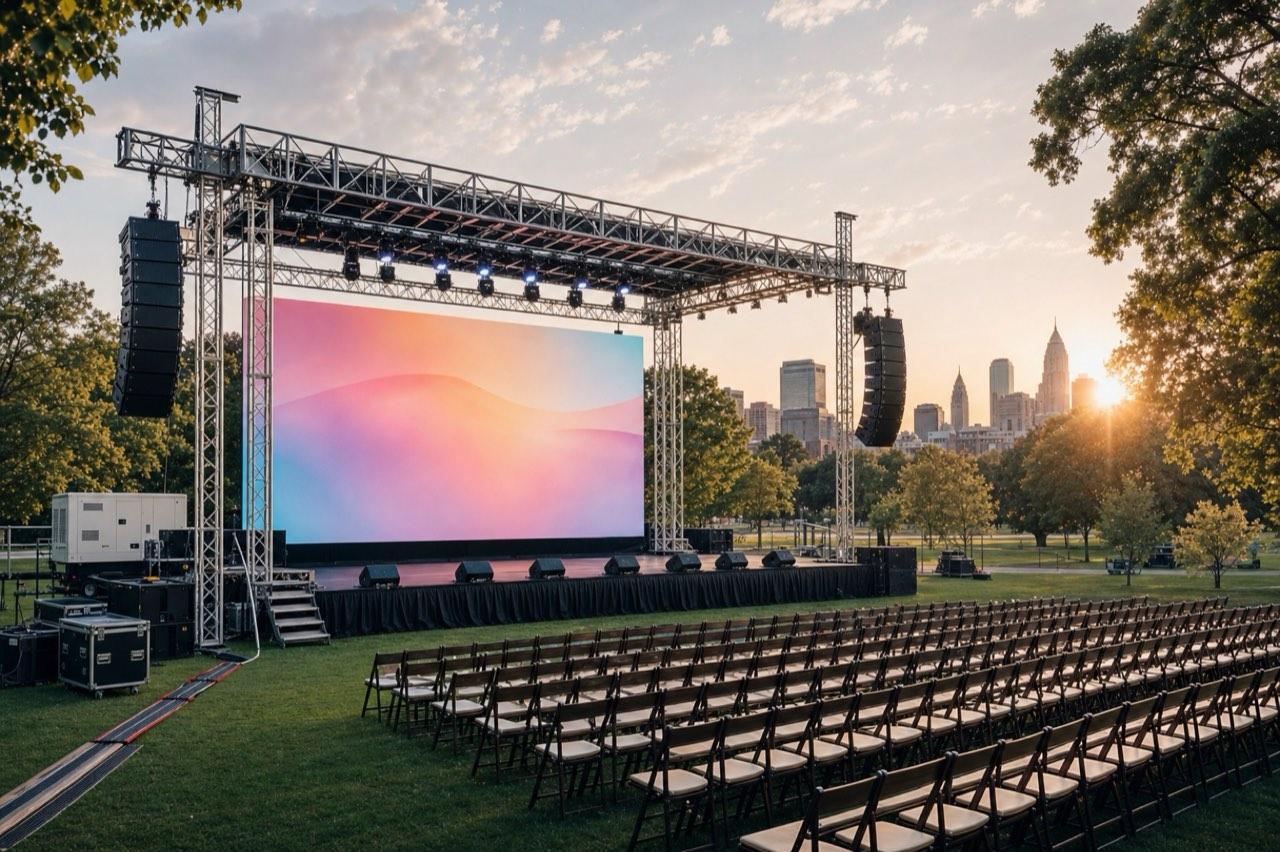
Outdoor corporate events in the Northeast carry a different production weight than the same program indoors. You inherit weather, power that has to be brought in, permits that vary by jurisdiction, and a load-in window that often sits inside city park rules or campus restrictions. Companies running summer activations across NY, NJ, CT, and MA usually underestimate two of those four variables, and the surprise lands on event day. This is the production checklist we use to scope outdoor corporate events in the region, with the same gear and crew planning that goes into our indoor productions.
Start with the load-in window, not the show time
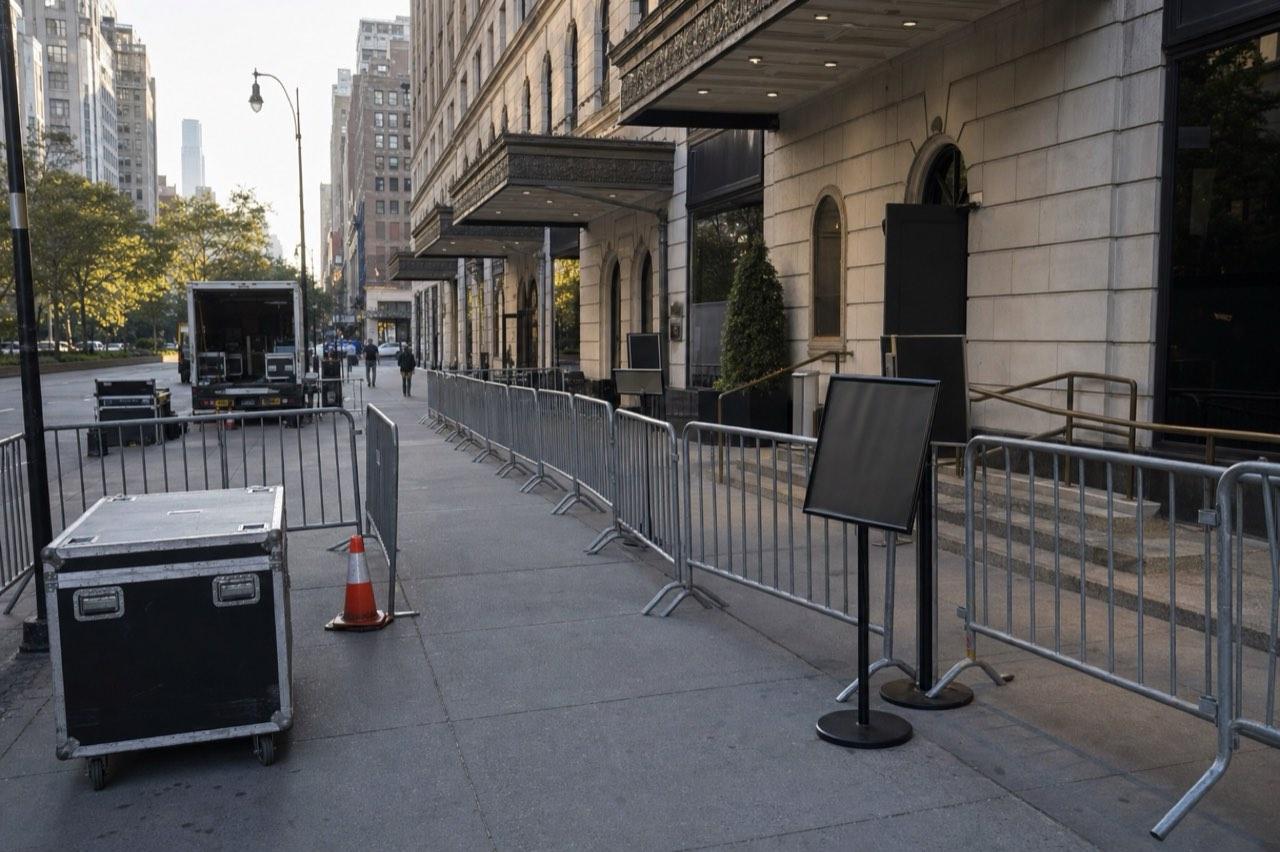
Indoor venues hand you a stage, dock, and house power. An outdoor site hands you a patch of grass, asphalt, or plaza. The real production schedule begins the day before doors, sometimes earlier, because every piece of stage, sound, lighting, and video has to arrive on a truck, get pushed into position, and be tied down before guests show up.
For a 500-attendee corporate event on a Manhattan plaza or a Hartford riverfront, the typical timeline looks like:
- T minus 2 days: ground protection and stage decking arrive on-site
- T minus 1 day: truss and roof go up, video walls and line arrays fly, generator placement and cable runs are dressed
- Show day morning: programming, sound checks, rehearsal block
- Doors
If your venue contact tells you load-in starts at 6 a.m. on show day, that is a single-day build, and a single-day build is where outdoor events go sideways. Push the conversation toward an overnight or T minus 1 load-in if the program runs longer than 90 minutes or includes anything that needs camera coverage, IMAG, or a real rehearsal pass.
Power is the variable nobody plans for
Most outdoor corporate sites have no usable house power. A few have one or two 20-amp circuits on a light pole, which is enough for a small acoustic setup and nothing else. Once you put up a stage with full PA, moving lights, an LED wall, and any sort of camera package, you need a generator.
Generator sizing is not guesswork. The rough math:
- A double-hung LED wall (12x7 feet, 2.9mm pitch) plus video processing pulls about 8-12 kW at white-screen peak
- A modest line array system for a 500-person audience draws 6-10 kW
- A small lighting package with 12 moving heads and 6 wash fixtures sits around 10-15 kW
- IMAG cameras, comms, transmission, and front-of-house adds 3-5 kW
Add a 25 percent safety margin and you are looking at a 45-60 kW diesel genset minimum for a standard corporate outdoor program, with a quieter Tier 4 unit for any plaza or park environment that has sound restrictions. Two smaller gensets in a main-and-backup configuration is the right call any time the show is being broadcast or recorded.
Permits move slower than you think
Permitting cadence is the single most common reason outdoor events get descoped or postponed. Every city in our service area has a different process:
- New York City: SAPO (Street Activity Permit Office) for streets and sidewalks, NYC Parks for parks, plus separate sound permits, generator permits, and tent permits for any tent over a certain square footage. Realistic timeline is 30 to 60 days for a clean application
- Jersey City and Hoboken: city film and event permitting offices, with separate review for amplified sound and any tent or stage
- Hartford, New Haven, and most CT municipalities: parks and recreation runs event permits, with the fire marshal reviewing any tent, stage, or generator placement
- Boston: Mayor's Office of Special Events and BPD for street closures, BFD for stages and tents
- Most college campuses: internal event services office, which is faster than city permitting but has its own insurance and union requirements
Build the permit calendar before you book the date. We have had clients hold a venue for six months and then find out a parallel street fair on the same block already pulled the sound permit, knocking their event back a week. The fix is starting permits the same week the date is locked.
Weather plans that actually work
Every outdoor corporate event needs a weather plan that is binding, not aspirational. "We will make a call the morning of" is not a plan. A real weather plan answers four questions in writing:
- What conditions trigger a delay versus a cancellation? Most production teams use 25 mph sustained winds, lightning within 8 miles, or sustained rain heavier than light drizzle as the decision points
- Who has the authority to make the call? One person, named, with a backup
- What is the rain location, and how long does it take to flip programming there? If the rain location is a tent on the same footprint, that is fine. If it is a different building, you need to know how the AV and seating get moved
- What is the refund or rebook structure with the production team if the call goes the wrong way?
The gear side of weather planning is straightforward: every outdoor speaker stack, LED wall, and lighting fixture should be rated for the conditions, ground-stacked or flown from a roof system that can take sustained wind, and shrouded if rain is in the forecast. Tent stages with full sides and a hard floor handle a surprising amount of weather. Open ground-stacked rigs do not.
Sound restrictions are local and unforgiving
Manhattan plazas, Brooklyn waterfront sites, Stamford harbor venues, and most New Jersey parks have a posted decibel limit at the property line, usually 75-85 dB measured 50 feet from the stage. That is a real number, and the parks or police will shut the show down if it is exceeded. The fix is line array deployment with proper aim and a system tech holding levels, not turning the front-of-house down at the last minute.
For corporate programs with speaker support and modest music playback, this is rarely a problem. For activations with a DJ or a band, this is the conversation to have at the very first site walk, not at sound check.
Internet and comms cannot be an afterthought
If any part of your program is being streamed, recorded to the cloud, or includes audience interaction over QR codes or a polling app, your internet plan needs the same attention as power. Outdoor venues do not have reliable Wi-Fi. The realistic options:
- A bonded cellular unit with two or three carriers feeding a single uplink, sized for the upstream bitrate of the stream
- A point-to-point microwave shot from a nearby building with hardline internet, if there is line of sight and time to set it up
- A temporary fiber drop from the local carrier, which is the cleanest answer for any plaza or venue that hosts events regularly, and the most expensive
For anything beyond a basic single-camera Zoom or YouTube stream, plan for bonded cellular at a minimum and budget for a backup carrier on a separate unit. Production comms (intercoms between the director, audio, lighting, and stage manager) should run on a dedicated wireless system, not the same network as the stream.
Insurance and COI
Every venue, city permit office, and park system in the Northeast asks for a certificate of insurance, usually with the venue or municipality listed as an additional insured. The standard ask is one million in general liability per occurrence, two million aggregate, often with workers compensation and auto coverage attached. Some plazas and university venues are now asking for higher limits or specific umbrella language. Fully insured production teams have these certificates ready inside 24-48 hours of a request. If your production partner needs a week to produce a COI, that is a warning sign about how the rest of the event will run.
Crew and union considerations
Anything happening in midtown Manhattan, most of the Brooklyn waterfront venues, large convention spaces in Boston, and a growing number of Northeast college campuses falls under union jurisdiction. The crew calls are real, the rates are predictable, and the work is excellent when the call is built correctly. Outdoor sites under city jurisdiction often add NYPD or local PD coverage, a fire watch, and sometimes a stagehand union steward depending on the scope.
The right move is to ask about union status during the venue conversation, not after the contract is signed. A program that gets quoted with a non-union crew and then turns out to be on union ground is the most painful midcycle correction in this business.
Internal links worth bookmarking
If you are scoping an outdoor corporate event right now, three of our recent posts go deeper on specific pieces of this puzzle:
- Outdoor staging and weather planning covers wind ratings, ballast, and stage roof selection
- Brand activation permits in NYC walks through SAPO, sound, and tent permit timing
- Union labor on NYC events explains how union calls are built and what to budget for
How we scope outdoor corporate events
Every outdoor corporate program we quote across NY, NJ, CT, and MA goes through the same intake: site walk or detailed site map review, power audit, permit timeline check, weather contingency, and crew plan. We size the rig to the actual program, not a generic package, and we send a full production schedule with the quote so the load-in plan is visible before any contract is signed. Fully insured, with union coordination where the site requires it.
If you have an outdoor corporate event coming up this summer or fall, send the basics — location, date, attendee count, and program length — to hello@eventprosource.com and we will come back with a scoped quote inside 24 hours.